
Aligning Service Execution with Finance and Inventory Systems
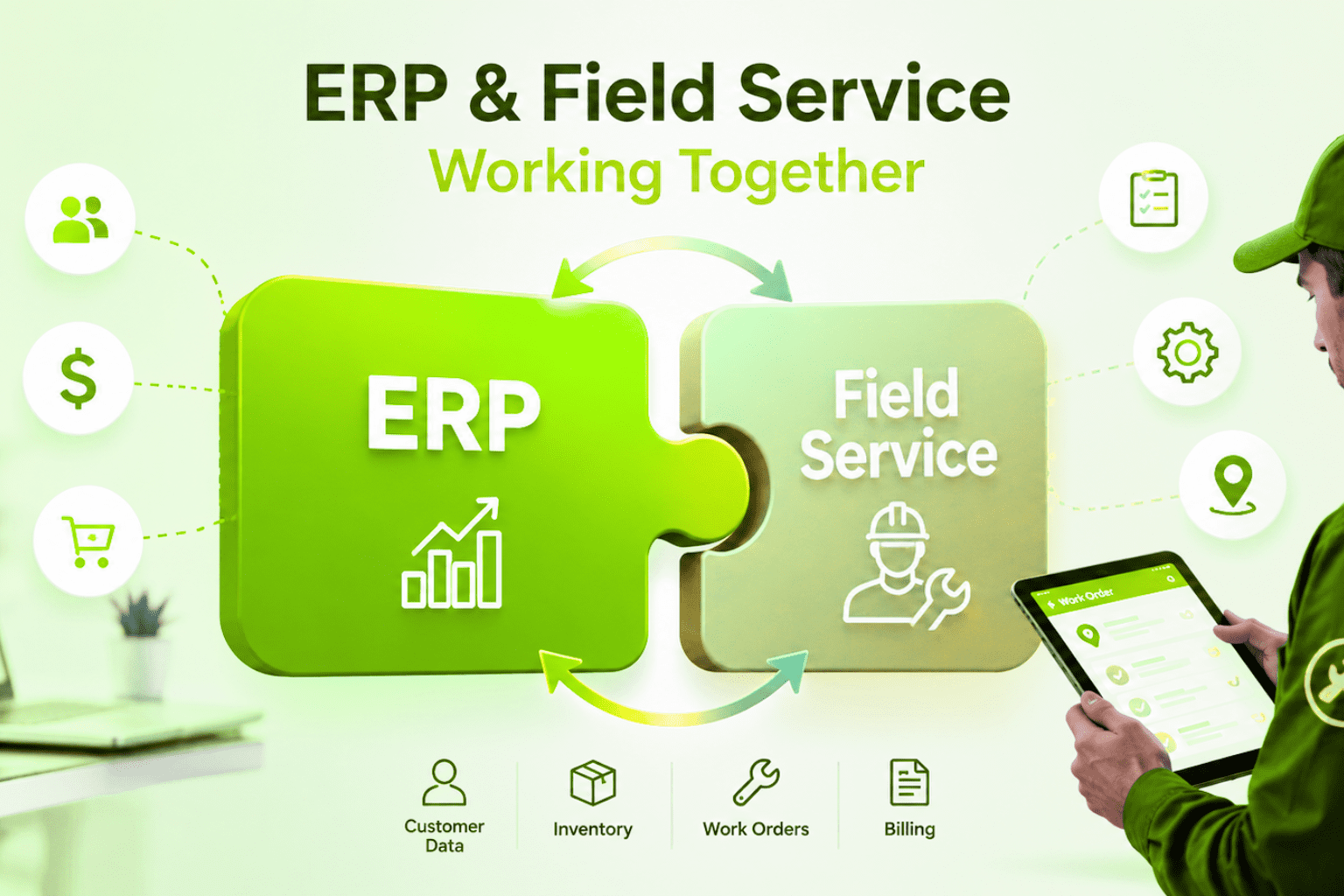
Service organizations that install, maintain, and repair machines depend on several operational systems. Field service platforms manage work orders, technician planning, and equipment maintenance. Enterprise Resource Planning systems manage financial operations, purchasing, inventory accounting, and customer billing.
While each system plays a different role, their effectiveness increases significantly when they operate together.
ERP integration connects operational service activity with financial and administrative processes. When service platforms and ERP systems exchange information automatically, organizations gain better visibility into service performance, inventory consumption, and revenue generated by maintenance operations.
For companies responsible for maintaining large installation bases of machines, ERP integration becomes an essential part of efficient service management.
Platforms such as Wello provide structured integration capabilities that allow field service operations to remain aligned with enterprise financial systems.
The role of ERP systems in service organizations
ERP systems function as the financial and administrative backbone of many organizations. They manage accounting records, purchasing activities, inventory valuation, and financial reporting.
Customer accounts, invoices, procurement transactions, and financial controls are typically handled within these systems.
For organizations providing equipment maintenance services, ERP systems track the financial dimension of service operations.
Service contracts generate recurring revenue. Spare parts must be purchased and stocked. Labor and materials used during maintenance interventions may contribute to billing.
While ERP systems are strong in financial and administrative functions, they are not designed to manage the operational complexity of field service activities.
Work order planning, technician coordination, equipment maintenance records, and service documentation are typically handled within dedicated service platforms.
ERP integration connects these two environments.
Why field service platforms require ERP connectivity
Field service operations generate information that directly affects financial and inventory systems.
When technicians perform maintenance or repair interventions, they may use spare parts and record labor time. These activities have financial implications.
Parts consumption affects inventory levels. Labor time may contribute to customer billing. Service reports confirm that maintenance obligations have been fulfilled under service contracts.
Without integration between service platforms and ERP systems, administrative teams must manually transfer this information between systems.
Manual data entry introduces inefficiencies and increases the risk of errors.
ERP integration allows these operational data flows to occur automatically.
Information recorded in the service platform can update ERP systems in real time or through scheduled synchronization.
This connection helps ensure that financial and operational data remain aligned.
Synchronizing customer and account information
Customer data typically originates in ERP systems.
Customer records include billing information, company details, contract agreements, and financial history.
When a service platform integrates with ERP systems, these customer records can be synchronized automatically.
Customer information becomes available within the service platform where work orders and service activities are managed.
Technicians and service planners can view customer details associated with service interventions.
This synchronization ensures that service operations always reference accurate customer information.
At the same time, the ERP system remains the authoritative source for financial records.
Connecting equipment installations with ERP records
Many service organizations maintain detailed installation bases consisting of machines installed at customer locations.
These installations may be associated with customer accounts managed within ERP systems.
Integration allows equipment records within the service platform to remain linked with customer records maintained in the ERP environment.
This connection ensures that service interventions performed on equipment can be associated with the correct customer account.
When technicians complete work orders, the operational activity recorded in the service platform can later contribute to financial processes such as invoicing or contract verification.
Managing spare parts and inventory synchronization
Spare parts represent a critical element of equipment maintenance operations.
Components such as filters, sensors, mechanical parts, or electronic modules may be replaced during service interventions.
Inventory management typically occurs within ERP systems.
Warehouse teams track stock levels, procurement transactions, and supplier relationships within these systems.
When technicians record parts used during maintenance interventions, this information must update inventory records.
Integration between the service platform and ERP system allows this synchronization to occur automatically.
When a technician registers a component replacement in a work order, the system can transmit the information to the ERP platform.
Inventory records update accordingly, ensuring that stock levels remain accurate.
This visibility helps organizations maintain adequate inventory while avoiding unnecessary overstocking.
Supporting billing and invoicing processes
Service operations frequently contribute to customer billing.
Some service contracts include fixed maintenance fees, while additional interventions may generate separate charges.
For example, repair services outside preventive maintenance programs may involve billable labor and spare parts.
Field service platforms capture the operational information associated with these activities.
Technicians record labor time, parts usage, and service outcomes within the work order.
ERP integration allows this information to flow directly into financial systems responsible for invoicing.
Administrative teams can generate invoices using accurate service data recorded during the intervention.
This reduces administrative effort and ensures that billing reflects the actual service delivered.
Aligning service contracts with financial systems
Service contracts often involve recurring financial agreements.
Customers may pay annual or monthly fees for maintenance services delivered over time.
These contracts are typically managed financially within ERP systems while operational maintenance activities are managed within the service platform.
Integration ensures that both systems remain aligned.
When service activities occur under a contract, the service platform records the operational work performed.
ERP systems maintain financial records related to the contract.
This connection allows organizations to verify that contractual services are delivered while maintaining accurate financial tracking.
Improving operational transparency across departments
ERP integration improves transparency between operational and financial departments.
Service teams focus on maintaining equipment and coordinating technicians. Finance teams focus on billing, procurement, and financial reporting.
When both environments share data through integration, departments gain visibility into each other's activities.
Finance teams can understand which services were performed and how parts were used during interventions.
Service teams gain visibility into customer accounts and contract details managed within ERP systems.
This shared visibility improves coordination between departments and reduces misunderstandings.
Supporting reporting and performance analysis
Integrated systems also support better reporting capabilities.
When service platforms and ERP systems share information, organizations can analyze both operational and financial performance.
Managers can review metrics such as:
Service revenue generated from maintenance operations
Inventory consumption associated with service activity
Labor utilization and technician productivity
Profitability of service contracts
These insights help organizations refine service strategies and allocate resources effectively.
Combining operational and financial data provides a more complete view of service performance.
Maintaining data consistency across systems
Data consistency becomes increasingly important as organizations grow.
When multiple systems operate independently, discrepancies may appear between operational and financial records.
Integration helps prevent these inconsistencies.
Customer data remains synchronized between platforms. Parts consumption recorded during work orders updates inventory records. Service documentation aligns with financial billing processes.
This consistency strengthens organizational control over service operations.
Managers can rely on accurate information when making operational or financial decisions.
Enabling scalable service operations
As installation bases expand and service teams grow, operational complexity increases.
Organizations may manage thousands of machines and coordinate technicians across several regions.
ERP integration allows service platforms to operate within the broader enterprise technology ecosystem.
Operational service data remains connected with financial systems, inventory management, and reporting tools.
This architecture supports scalable service operations.
Companies can expand their service activities without losing visibility over financial and operational performance.
Building connected service ecosystems
Modern service organizations depend on connected digital systems to manage complex operations.
Field service platforms coordinate technicians and equipment maintenance. ERP systems manage financial records, inventory, and procurement.
Integration between these environments ensures that service activity and financial processes remain aligned.
Platforms such as Wello allow organizations to connect operational service workflows with enterprise financial systems.
Customer records, parts usage, work order activity, and service documentation can flow between systems automatically.
For companies responsible for maintaining machines and technical infrastructure across large installation bases, ERP integration provides the foundation for efficient and transparent service operations.