
Structuring Long Term Maintenance Agreements for Equipment Service Companies
Industrial equipment manufacturers and technical service companies often operate in long term relationships with their customers. Machines installed in production facilities, infrastructure environments, or technical buildings must be maintained for many years. Customers rely on service providers to ensure that equipment continues to function safely and reliably.
Because of this, many service organizations operate through structured service contracts.
Service contracts define the maintenance services that will be delivered over time. These agreements often include preventive maintenance visits, inspections, repair services, and response commitments.
Managing these contracts becomes increasingly complex as the number of machines and customers grows.
Each contract may include different maintenance schedules, service levels, and documentation requirements. Service organizations must ensure that contractual obligations are fulfilled while coordinating technician schedules and operational resources.
Service contract management systems provide the structure required to manage these agreements efficiently.
Platforms such as Wello allow organizations to link service contracts directly with equipment records, maintenance schedules, and work order execution. This ensures that service commitments remain connected to operational workflows.
The role of service contracts in equipment maintenance
For many industrial equipment companies, service contracts represent an important part of the business model.
Customers purchase machines with the expectation that the manufacturer or service provider will maintain them throughout their operational life.
Service contracts formalize this relationship.
These agreements define the scope of maintenance services that will be provided and the responsibilities of both parties.
Typical elements of service contracts may include:
Scheduled preventive maintenance visits
Inspection and safety verification procedures
Repair services when equipment failures occur
Response time commitments for service interventions
Access to technical support and spare parts
Because these agreements extend over several years, service organizations must manage them carefully.
Operational teams must ensure that scheduled maintenance visits occur on time and that service commitments are fulfilled consistently.
Linking service contracts with equipment records
One of the most important aspects of service contract management is linking contracts with the equipment covered by the agreement.
Each contract may apply to a specific set of machines installed at a customer location.
Service platforms allow these machines to be associated directly with the contract record.
This connection ensures that service obligations remain visible within the operational system.
When technicians access equipment records, they can see whether the machine is covered by a service contract.
Maintenance schedules and service tasks defined within the contract can automatically generate work orders when required.
This integration helps ensure that contractual maintenance activities are not overlooked.
Automating maintenance schedules within contracts
Preventive maintenance programs often form the core of service contracts.
These programs define how frequently equipment must be inspected and maintained.
For example, a machine may require quarterly inspections, annual performance verification, or periodic component replacements.
Service platforms allow these maintenance schedules to be configured within the contract.
Once defined, the system automatically generates work orders when maintenance tasks become due.
Planning teams can assign technicians to perform the intervention according to the schedule.
Technicians follow inspection procedures defined within the maintenance program.
This automation ensures that service commitments defined in the contract are translated directly into operational tasks.
Managing service commitments and response times
Service contracts often include commitments related to response times and service availability.
Customers operating critical equipment may require rapid intervention when failures occur.
Service level agreements within the contract define how quickly the service provider must respond to incidents.
Service platforms allow these commitments to be monitored within operational workflows.
When service requests are received, the system can track whether response times defined in the contract are respected.
Planning teams gain visibility into which service requests require immediate attention.
This visibility helps ensure that contractual service levels are maintained.
If response times approach defined limits, planners can prioritize technician assignments accordingly.
Coordinating technician activity within service contracts
Technicians play a central role in fulfilling service contract obligations.
Preventive maintenance visits, inspections, and repair interventions must all be coordinated through technician activity.
Service platforms help planning teams manage these activities efficiently.
Work orders generated from service contracts appear within the planning system alongside other service tasks.
Planners can assign technicians according to availability, required skills, and geographic location.
Technicians receive the work order through mobile service applications and perform the required tasks at the customer site.
Once the intervention is completed, service documentation becomes part of the equipment record and contract history.
This coordination ensures that service commitments remain connected to operational execution.
Documenting maintenance activities for contract verification
Service contracts often require documented evidence that maintenance activities have been performed.
Customers may need confirmation that inspections occurred according to schedule and that service interventions were completed properly.
Service platforms allow technicians to generate structured service reports during each intervention.
These reports may include inspection results, measurements, parts replacements, and technician observations.
Digital signatures from technicians and customer representatives confirm that the work was completed.
Because documentation remains linked to the work order and equipment record, service providers can demonstrate that contractual obligations have been fulfilled.
This documentation also supports transparency between service providers and customers.
Contracts covering complex equipment may require more service interventions than originally anticipated.
Managers can use this information when negotiating future service agreements.
Understanding contract performance also helps organizations allocate service resources more effectively.
Tracking contract performance over time
Managing service contracts involves more than simply scheduling maintenance visits.
Organizations must also monitor how well these contracts perform over time.
Service platforms allow managers to review operational data related to contract execution.
For example, managers can analyze how many maintenance interventions were performed under each contract, how often repair incidents occurred, and how quickly service requests were addressed.
This information helps organizations understand the operational demands associated with different contracts.
Contracts covering complex equipment may require more service interventions than originally anticipated.
Managers can use this information when negotiating future service agreements.
Understanding contract performance also helps organizations allocate service resources more effectively.
Supporting billing and financial processes
Service contracts are often linked to financial arrangements.
Customers may pay fixed fees for maintenance services delivered over time. In some cases, additional services such as repairs or component replacements may be billed separately.
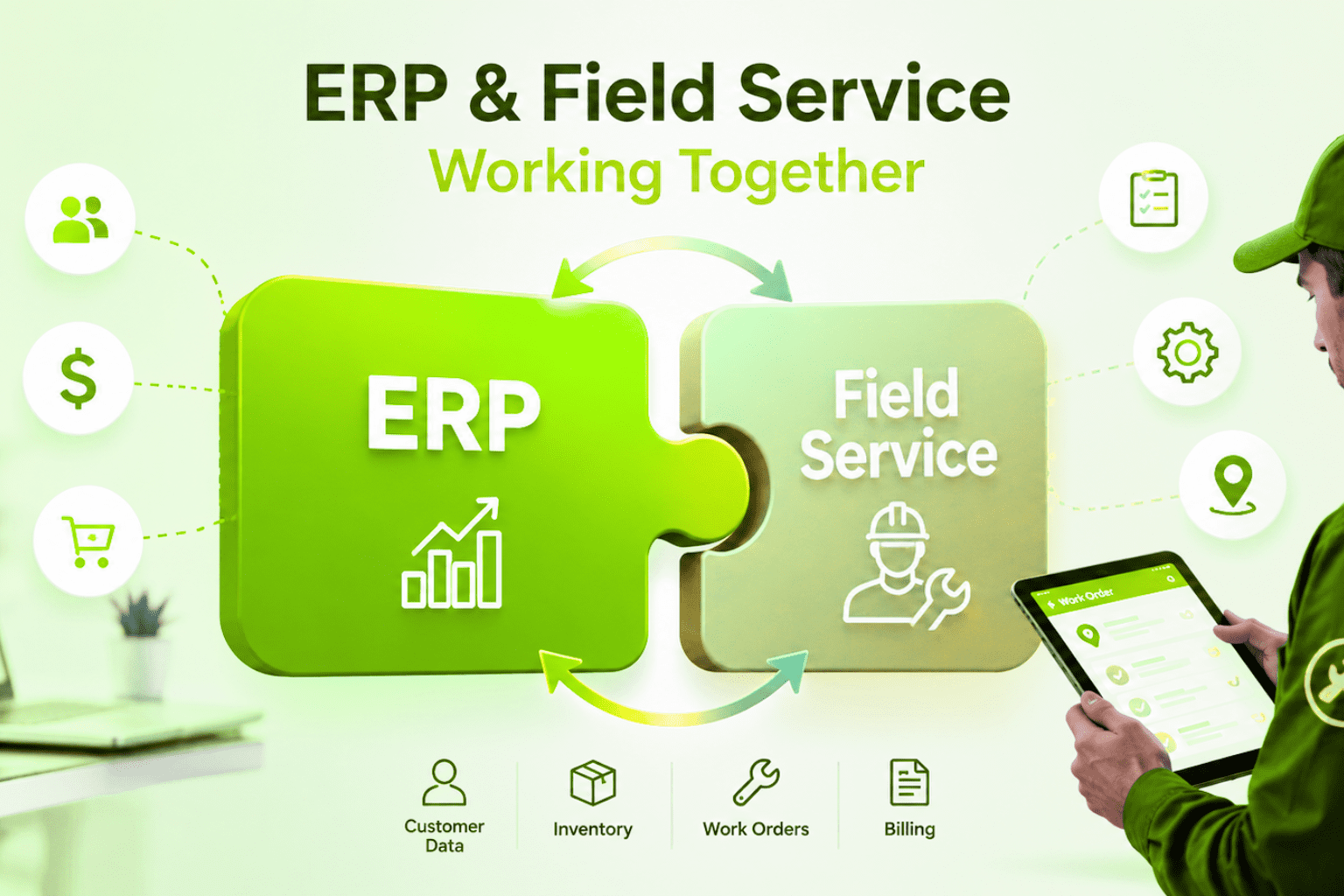
Service platforms can support these financial processes by connecting operational data with billing systems.
Work orders generated under service contracts contain information about the services performed and parts used during the intervention.
This information can be transmitted to ERP systems that manage invoicing and financial records.
By linking service documentation with financial processes, organizations maintain accurate records of services delivered under each contract.
Managing contracts across large installation bases
Large equipment service organizations may manage hundreds or thousands of service contracts simultaneously.
Each contract may cover multiple machines installed across different locations.
Without structured systems, tracking these agreements becomes extremely difficult.
Service platforms provide a centralized environment where all contracts remain visible and organized.
Managers can review active contracts, monitor maintenance schedules, and track service activity across the installation base.
This centralized visibility helps organizations maintain control over service obligations while coordinating operational resources effectively.
Supporting long term service relationships
Service contracts represent long term commitments between service providers and their customers.
Customers depend on these agreements to ensure that equipment remains operational and safe.
Service providers must deliver maintenance services consistently and maintain transparent documentation.
Service contract management systems help ensure that these commitments are fulfilled.
By linking contracts with equipment records, maintenance schedules, work orders, and service documentation, service platforms provide a structured environment where contractual obligations remain connected to operational workflows.
Platforms such as Wello allow equipment service organizations to manage service agreements efficiently while maintaining visibility over maintenance activities and service performance.
For companies responsible for maintaining machines and technical systems across large installation bases, structured service contract management becomes an essential component of reliable service operations.