Managing Installation Bases, Maintenance, and Technicians

Industrial equipment companies operate in environments where machines must function reliably for many years. Equipment may be installed in factories, production plants, warehouses, energy facilities, or technical infrastructure. These machines often represent critical components of the customer’s operations.

Because of this, service and maintenance become central to the business model of many equipment manufacturers and service providers.

Companies that install machines are often responsible for maintaining them throughout their lifecycle. This responsibility may include preventive maintenance, inspections, repairs, upgrades, and technical support.

As installation bases grow, managing these service operations becomes increasingly complex.

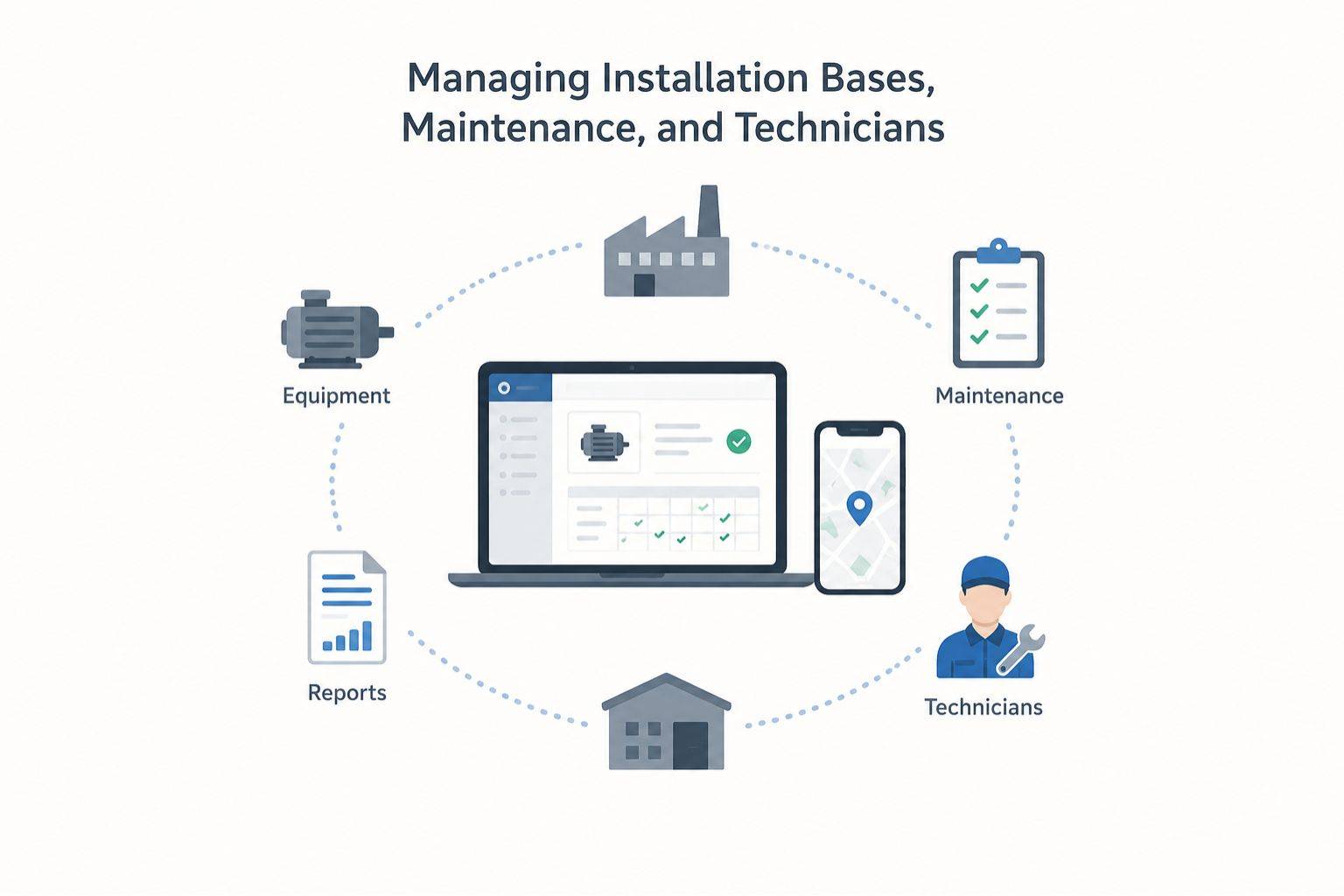
Service teams must track thousands of machines across different locations. Technicians must travel between sites to perform interventions. Maintenance schedules must be respected to ensure reliability. Documentation must remain accessible for customers and regulatory verification.

Field service software provides the operational structure required to manage these activities.

Platforms designed for equipment service organizations help coordinate technicians, track equipment history, manage work orders, and maintain service documentation across the entire installation base.


Managing installation and maintenance workflow

Managing installation and maintenance workflow

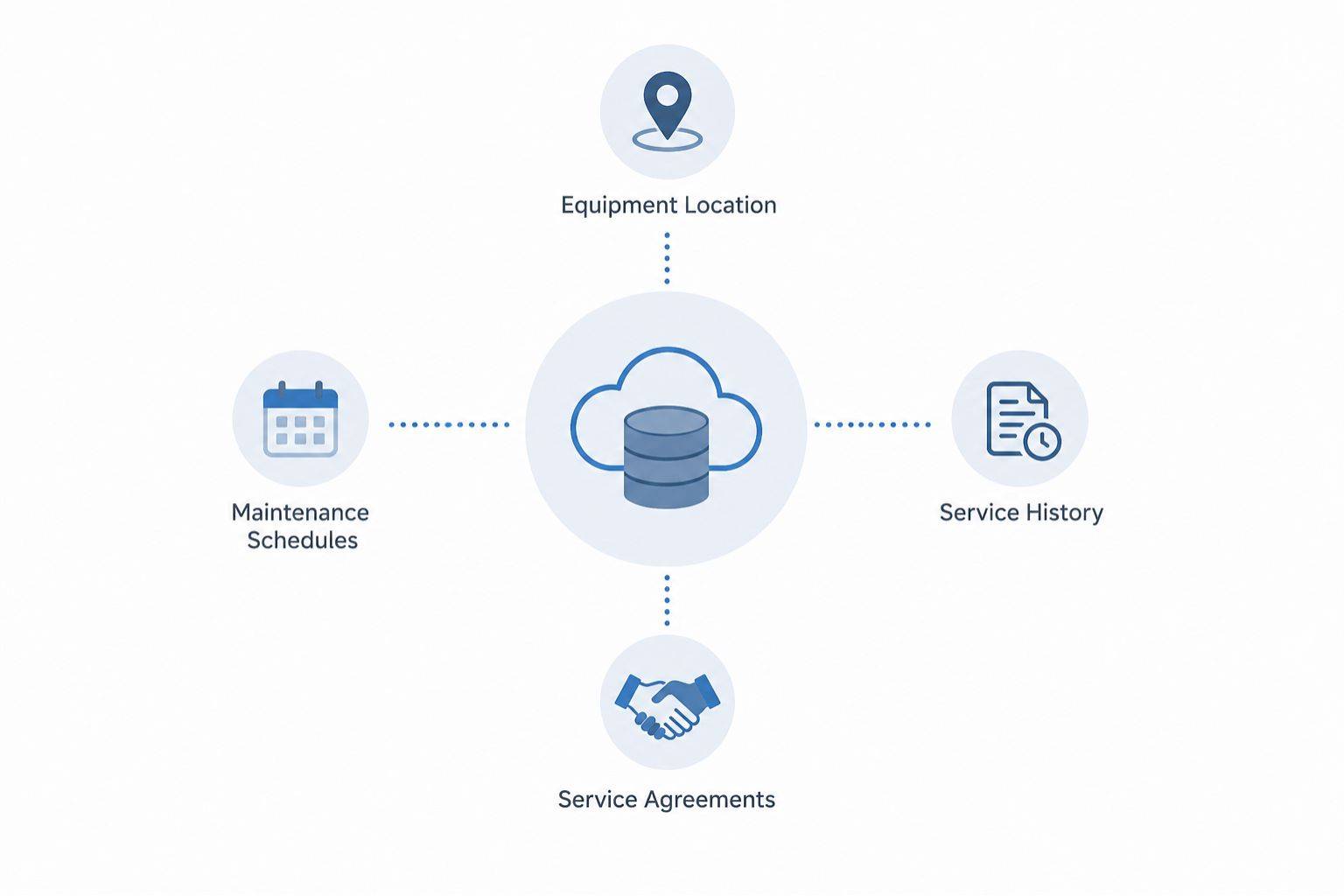
Cloud and database service diagram

Cloud and database service diagram

The operational structure of industrial equipment service

Companies maintaining industrial equipment operate very differently from businesses that provide occasional repair services.

Industrial service organizations typically maintain long term relationships with customers. Machines installed in production environments may require regular maintenance for many years.

This creates an operational model centered on installation bases.

Each installed machine becomes part of a service portfolio that must be monitored and maintained over time.

Service teams must keep track of:

Equipment location and configuration

Maintenance schedules and inspection intervals

Service history and component replacements

Customer service agreements and response commitments

When installation bases grow to hundreds or thousands of machines, managing this information manually becomes difficult.

Field service software provides a structured environment where equipment records and service activities remain organized.

Managing large installation bases

Industrial equipment companies often manage installation bases distributed across multiple regions.

Machines may be installed in different factories, warehouses, or infrastructure environments. Each installation location may have its own operational requirements and maintenance schedules.

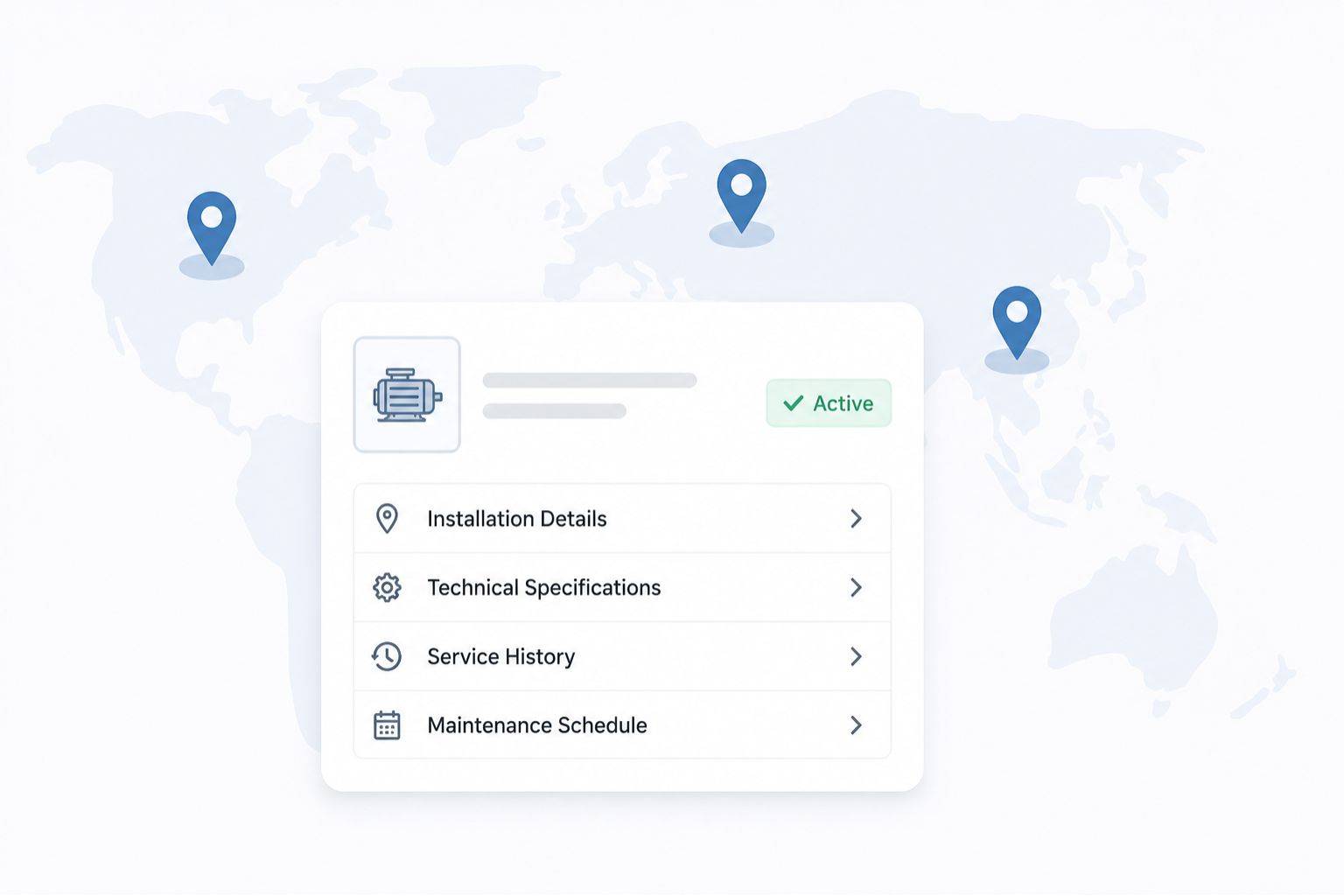
Field service platforms maintain structured equipment records for every asset in the installation base.

These records include installation details, technical specifications, service history, and inspection documentation.

When technicians receive work orders, they can review the complete history of the equipment before performing maintenance.

This access to historical information helps technicians diagnose issues more efficiently and ensures that service interventions follow established maintenance procedures.

Maintaining structured installation base records also allows organizations to plan preventive maintenance activities more effectively.

Managers can monitor maintenance schedules across the entire installation base and ensure that required inspections are performed on time.

Dashboard card showing machine status with a green Active badge and a list: Installation Details, Technical Specifications, Service History, Maintenance Schedule; world map backdrop with location pins.

Modern dashboard

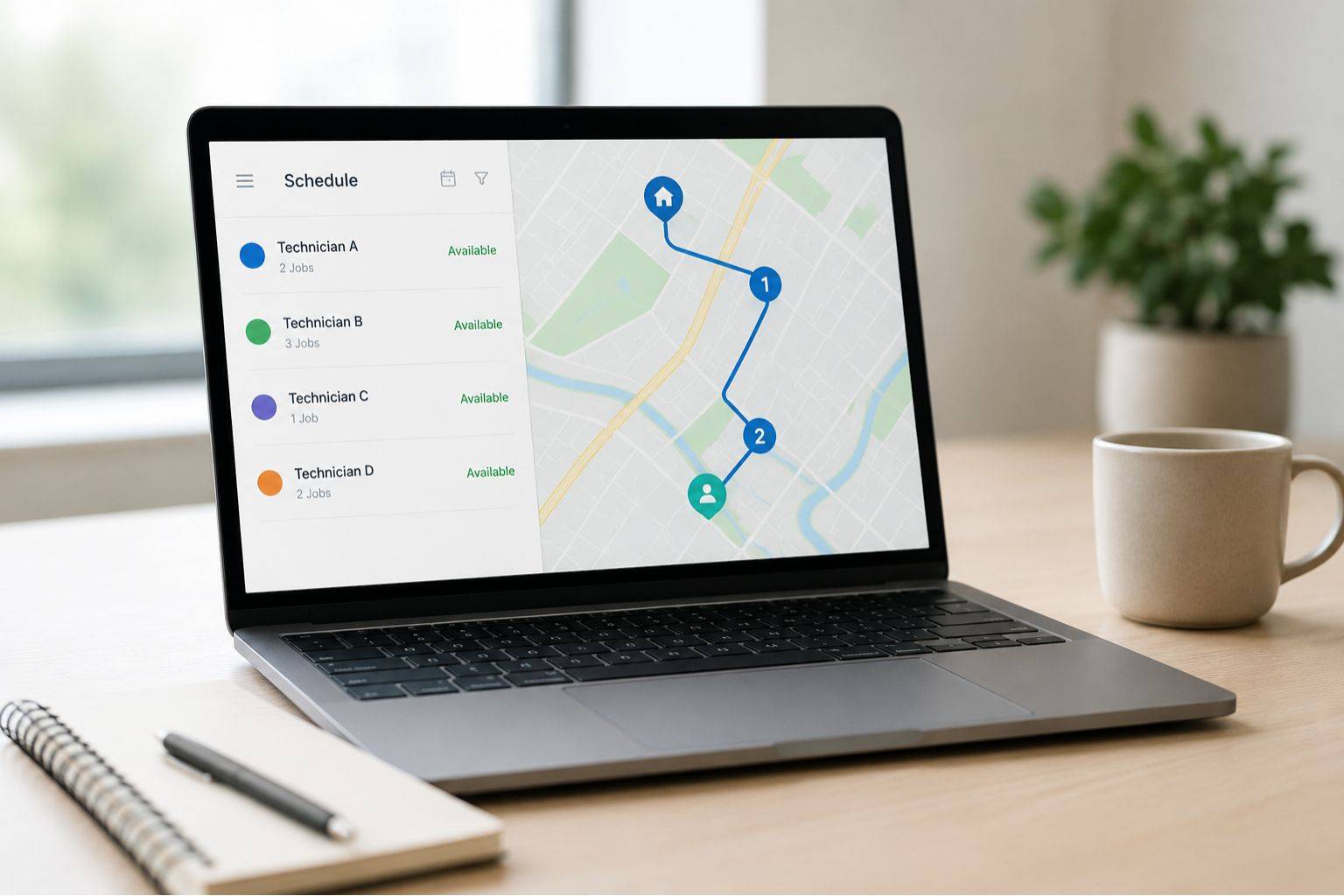
Modern office with scheduling interface

Modern office with scheduling interface

Coordinating technicians across multiple locations

Technician coordination represents one of the most complex operational challenges for equipment service companies.

Technicians must travel between customer sites to perform maintenance interventions.

Planning teams must consider several factors when assigning work orders.

Technician availability

Required technical skills

Customer service commitments

Travel distance between locations

Field service software provides planning tools that allow service teams to coordinate these activities efficiently.

Planning systems display technician schedules and work order assignments within a structured interface.

Planners can assign technicians to service visits according to their availability and location.

Some platforms also provide route planning tools that help reduce travel time between interventions.

This coordination helps organizations use technician resources more effectively while ensuring that service commitments are respected.

Industrial maintenance

Industrial maintenance

Managing preventive maintenance programs

Preventive maintenance is a fundamental part of industrial equipment service.

Regular inspections and maintenance procedures help ensure that machines continue operating reliably.

Equipment manufacturers and service providers often define maintenance schedules based on operational hours or calendar intervals.

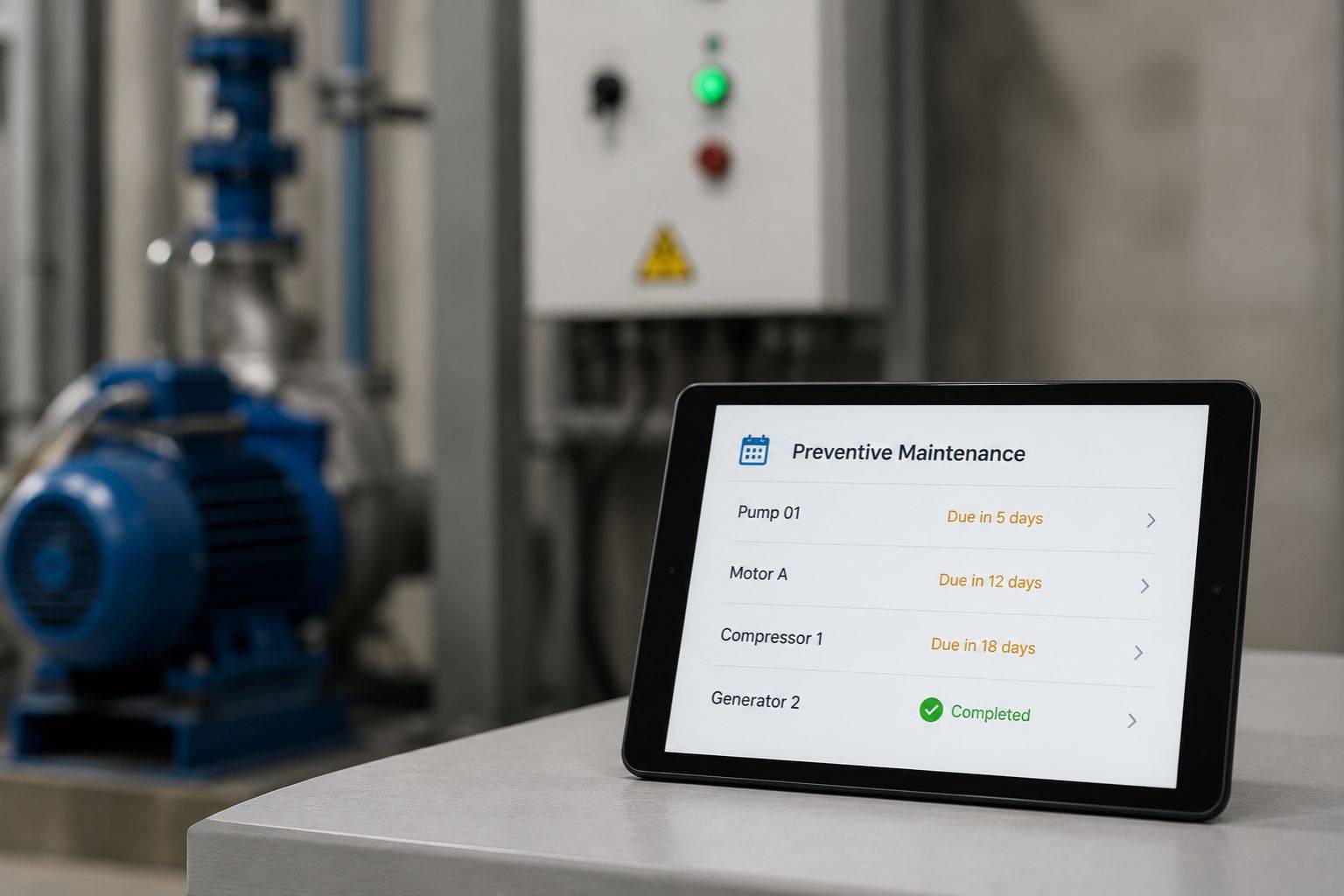
Field service software allows these maintenance schedules to be configured within the platform.

Each machine in the installation base can be associated with a preventive maintenance plan.

The system automatically generates work orders when maintenance interventions are due.

Planning teams can then assign technicians to perform these tasks.

Technicians follow defined inspection procedures using structured forms and checklists.

Once the intervention is completed, the results become part of the equipment’s service history.

This process ensures that preventive maintenance programs remain consistent across the entire installation base.
Managing service documentation and reporting

Industrial service environments require detailed documentation.

Customers depend on service providers to maintain equipment reliability. Regulatory environments may also require documented inspections and certifications.

Service documentation therefore becomes an important operational asset.

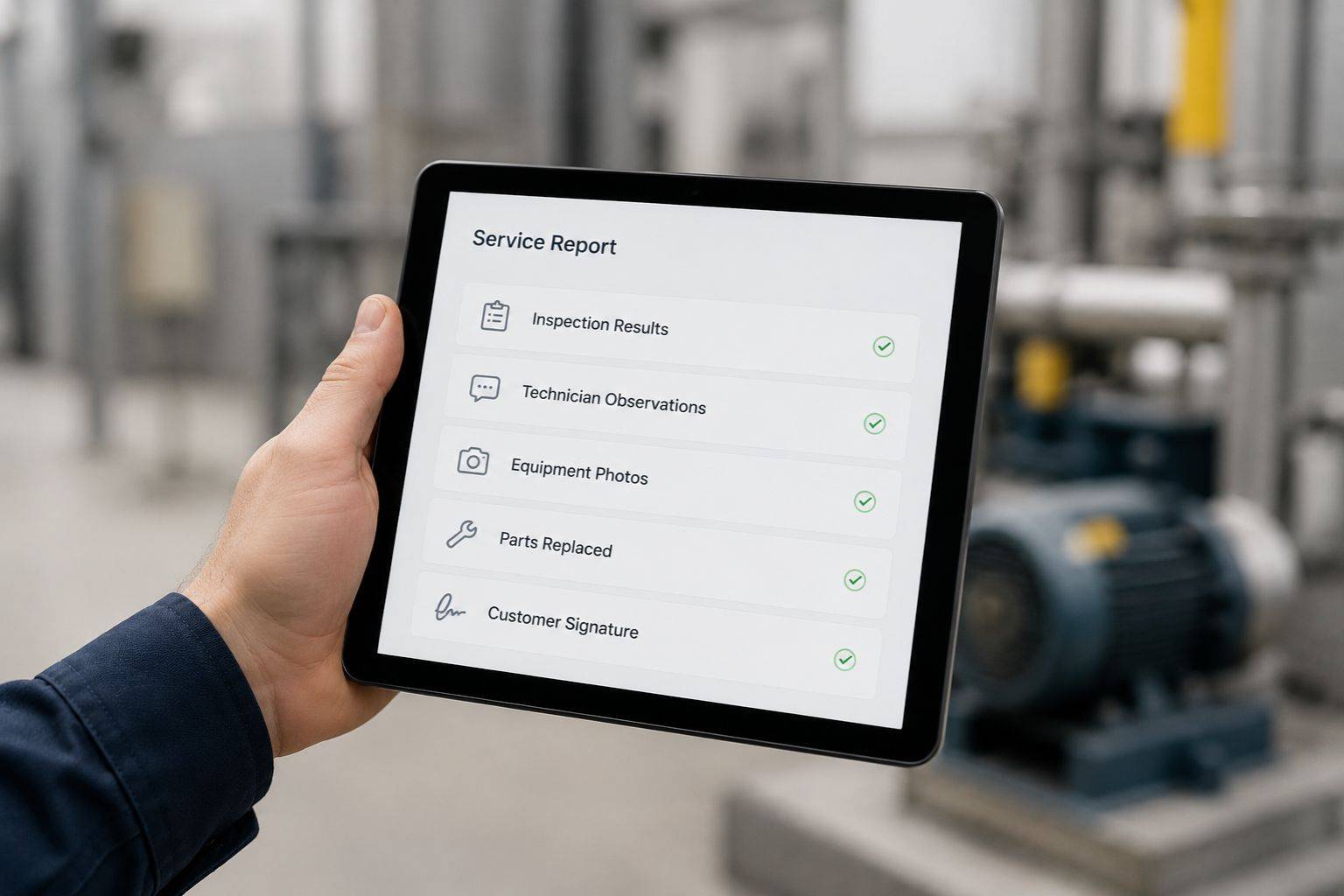
Field service software allows technicians to generate service reports directly within the platform.

These reports may include:

Inspection results

Technician observations

Photographs of equipment conditions

Parts replaced during maintenance

Customer confirmations and signatures

Because documentation is recorded within the system, it remains linked to the equipment record and work order.

Customers can access these reports when verification is required.

Service managers can also review documentation to monitor maintenance quality and operational performance.

industrial service inspection

Industrial service inspection

Modern workspace with parts inventory UI

Modern workspace with parts inventory UI

Tracking spare parts and component replacements

Spare parts management is closely connected to service operations.

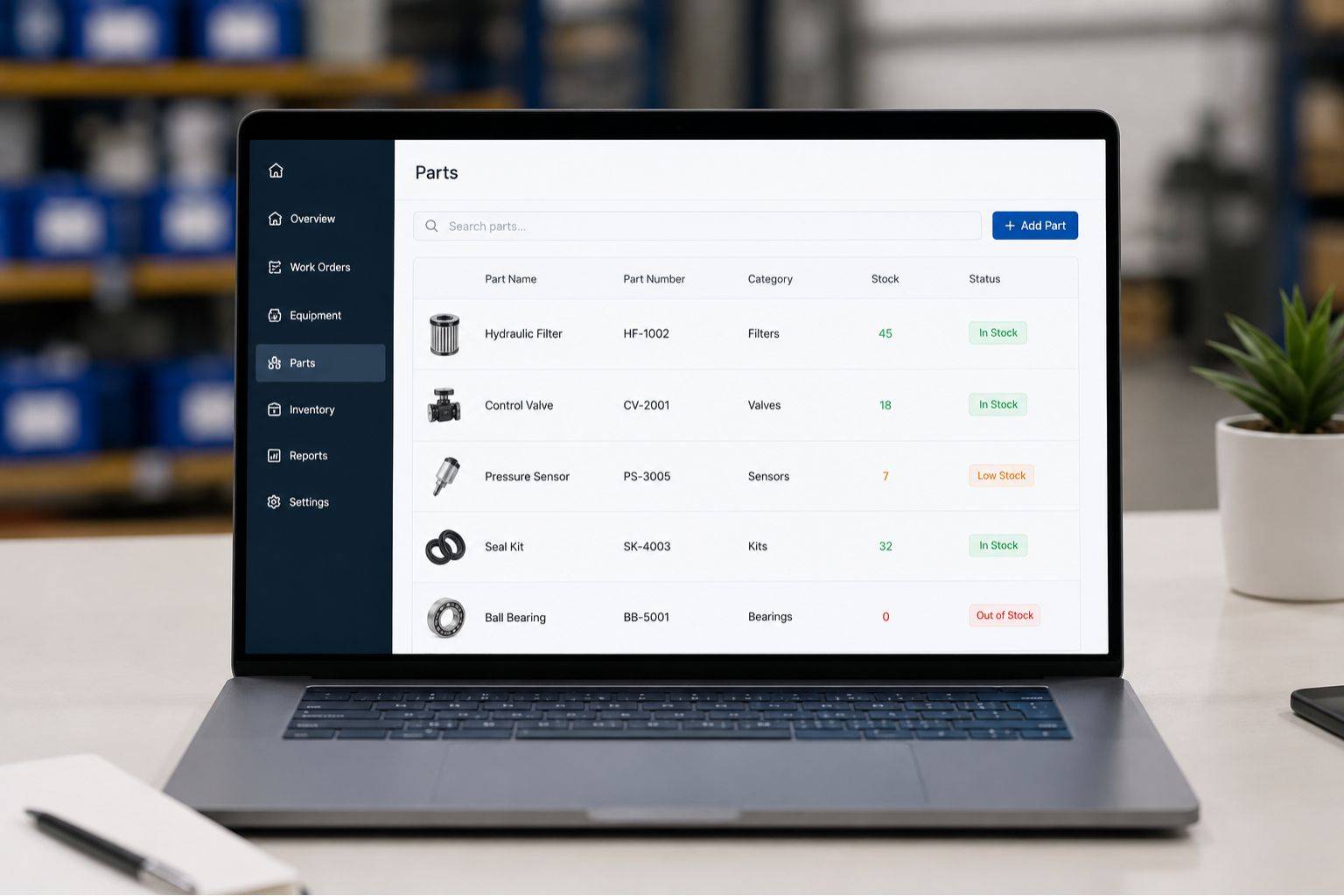
During maintenance and repair interventions, technicians may replace components such as filters, valves, sensors, or mechanical assemblies.

Field service software allows technicians to record parts usage directly within work orders.

Each component replaced during the intervention becomes part of the equipment history.

This information helps organizations track how machines evolve over time.

Parts usage data also supports inventory planning.

Warehouse teams can monitor which components are used most frequently and ensure that these parts remain available.

Accurate parts tracking reduces delays during service interventions and improves first time repair rates.

Supporting service contracts and long term agreements

Industrial equipment companies often operate under service contracts with their customers.

These contracts define the maintenance services that must be delivered over time.

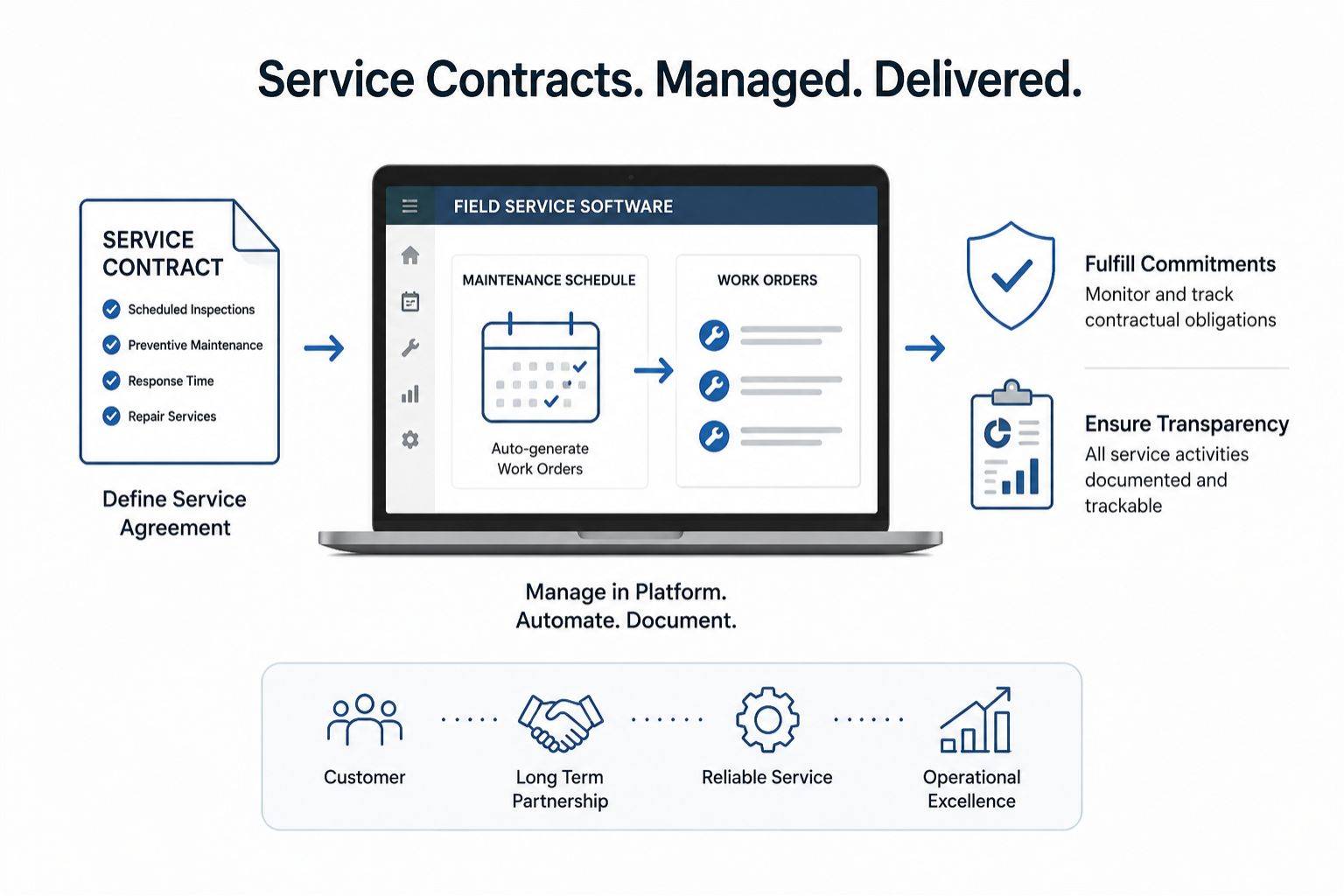
Service agreements may include scheduled inspections, preventive maintenance visits, response time commitments, and repair services.

Field service software allows these contracts to be managed within the platform.

Maintenance schedules defined in the contract can automatically generate work orders.

Service activities performed under the agreement remain documented within the system.

Managers can monitor whether contractual service commitments are fulfilled.

This structured approach ensures that service contracts remain transparent and manageable.

Service contract management flow diagram

Service contract management flow diagram

Providing visibility for customers

Providing visibility for customers

Providing visibility for customers

Customers operating industrial equipment often want visibility into the service activities performed on their machines.

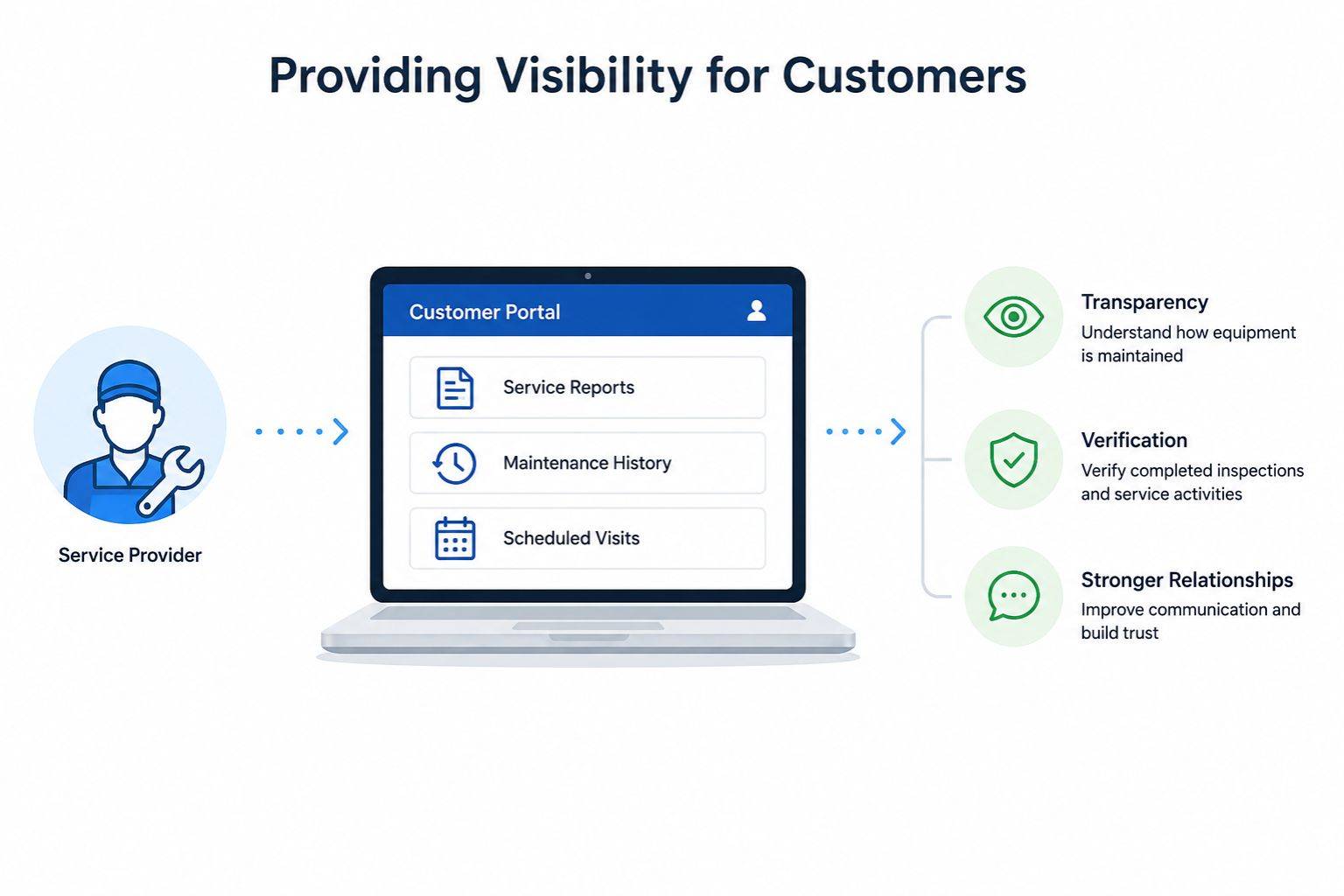
Service providers may therefore offer customer portals connected to the service platform.

Through these portals, customers can review service reports, maintenance history, and scheduled service visits.

This transparency helps customers understand how their equipment is maintained.

Customers can verify that inspections have been completed and review documentation associated with service interventions.

Providing this visibility strengthens service relationships and improves communication between service providers and customers.

Service operations and ERP integration

Service operations and ERP integration

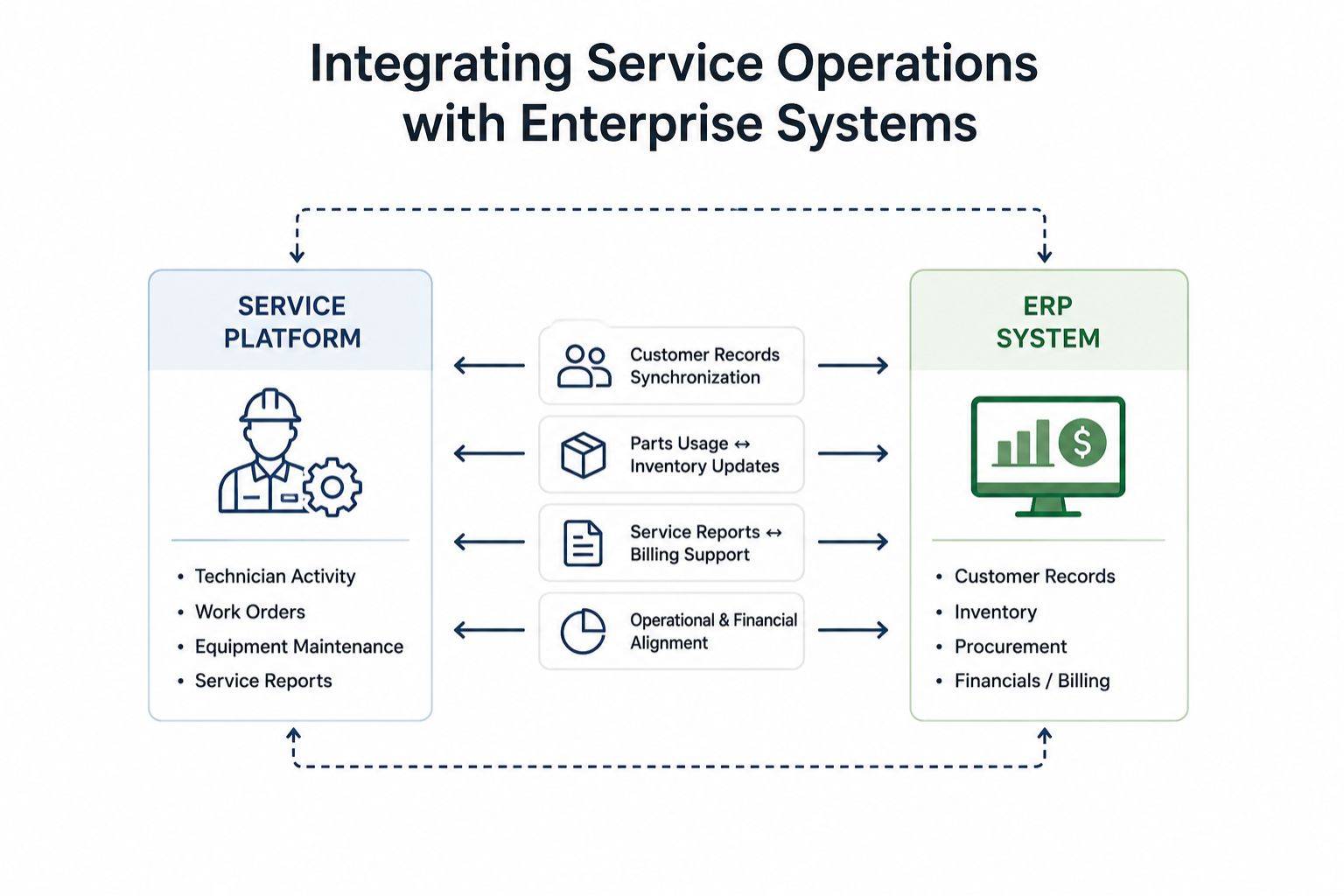
Integrating service operations with enterprise systems

Industrial service organizations typically operate with several enterprise systems.

ERP platforms manage financial operations, procurement, and inventory accounting.

Service platforms manage technician activity and equipment maintenance.

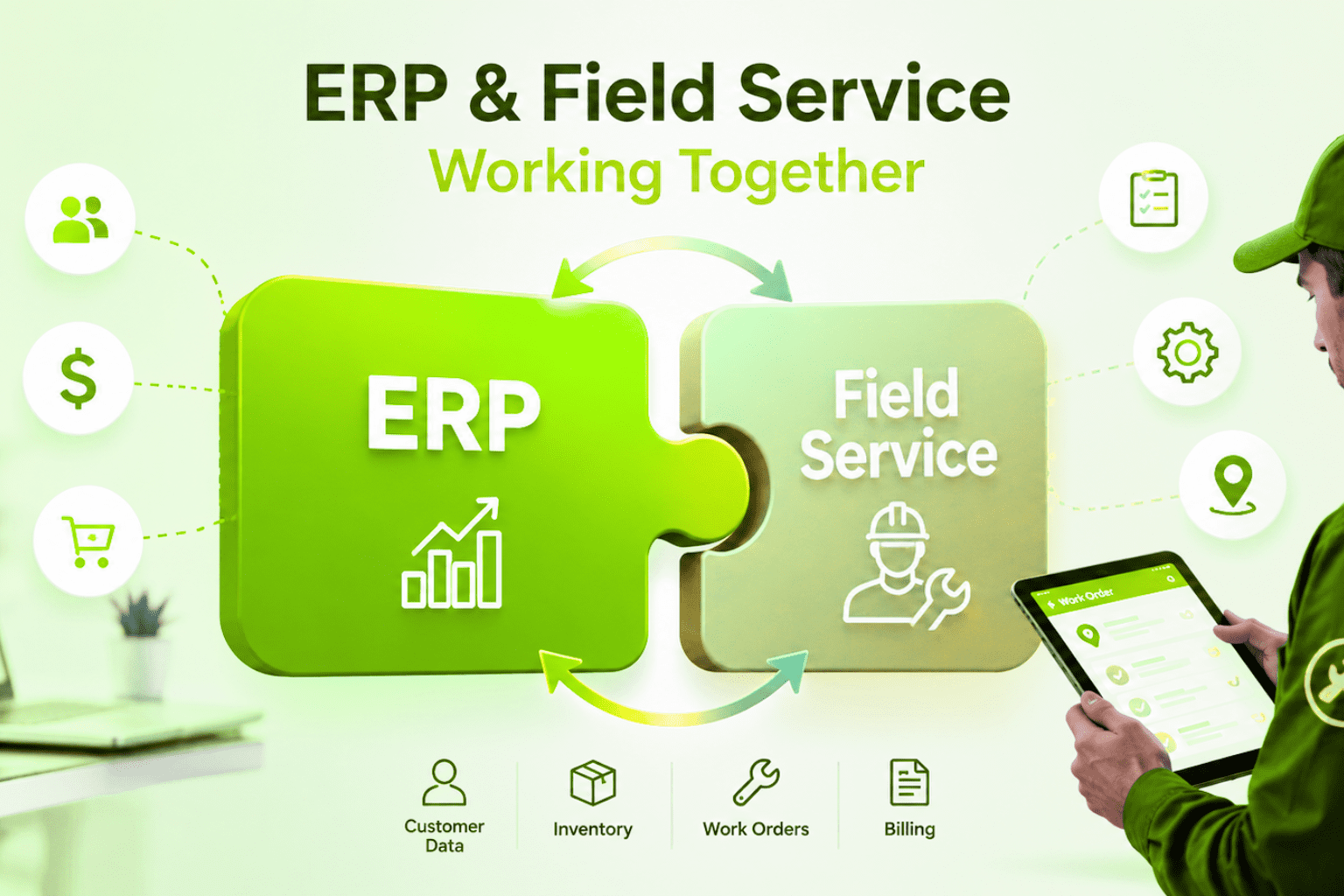
Integrations allow these systems to exchange information.

For example, customer records stored in ERP systems may be synchronized with the service platform.

Parts usage recorded during work orders may update inventory records in ERP systems.

Service reports generated by technicians may support billing processes.

These integrations help ensure that operational and financial systems remain aligned.

Supporting growth in industrial service operations

As installation bases expand and service teams grow, operational complexity increases.

Managing service activities manually becomes increasingly difficult.

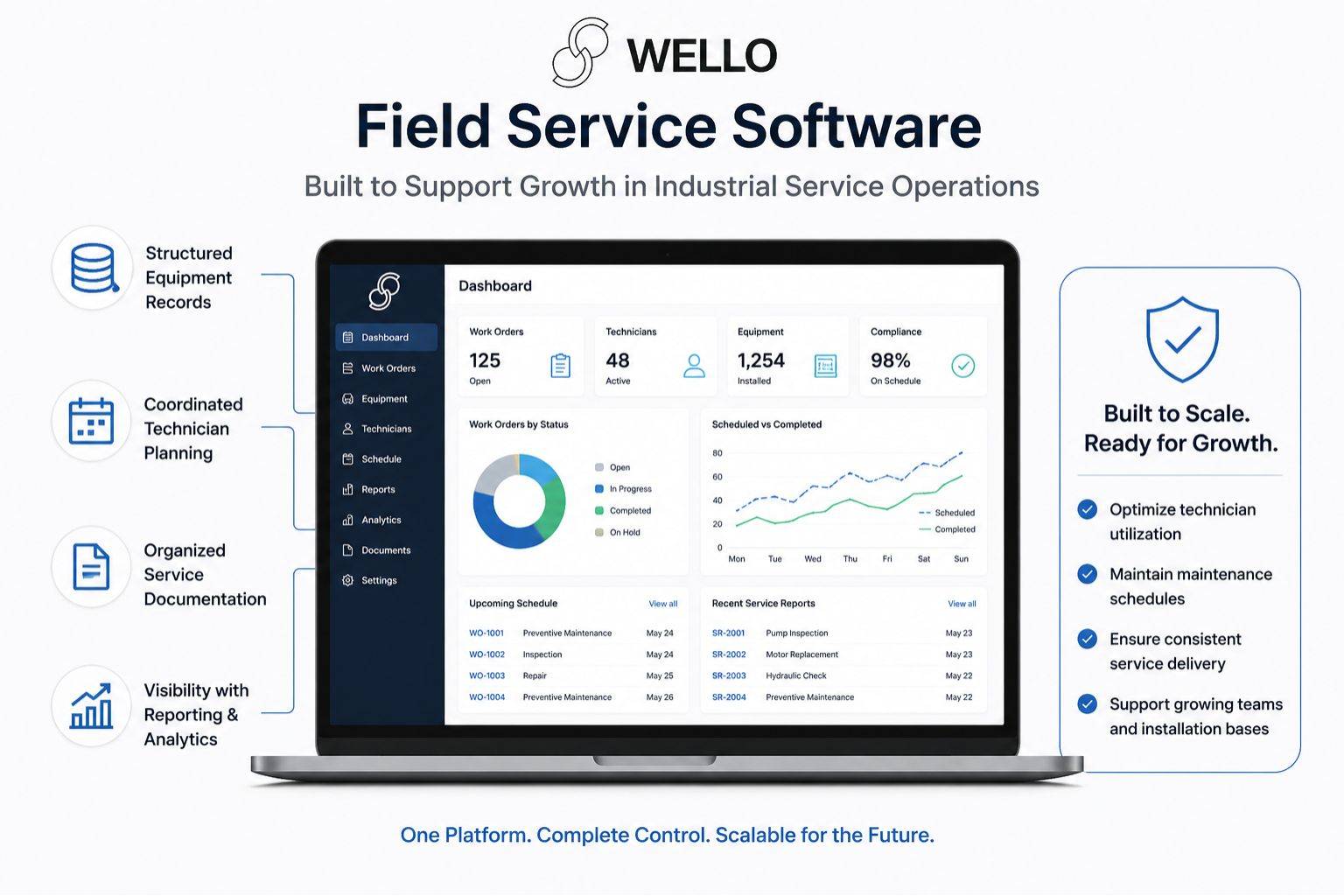
Field service software provides the operational infrastructure required to support growth.

Equipment records remain structured across the installation base. Technician activity is coordinated through planning systems. Service documentation remains accessible and organized.

Managers gain visibility into service operations through reporting and analytics tools.

This visibility helps organizations optimize technician utilization, maintain maintenance schedules, and ensure consistent service delivery.

Service operations and ERP integration

Service operations and ERP integration

Hero image for Wello Field Service Software showing a laptop dashboard with metrics; left column highlights include structured equipment records, technician planning, service documentation, and analytics; right column lists growth-ready benefits.

Field service software dashboard

A structured approach to equipment service management

Industrial equipment service organizations operate in environments where machines must remain reliable and service operations must remain organized.

Field service software provides the structure required to coordinate technicians, maintain equipment history, manage maintenance schedules, and document service interventions.

Platforms such as Wello support organizations responsible for installing, maintaining, inspecting, and repairing machines across large installation bases.

By connecting work orders, technician planning, equipment records, and service documentation within a unified platform, service organizations can manage their operations more efficiently while maintaining transparency with customers.

For companies responsible for maintaining critical equipment installations, structured field service software becomes an essential component of modern service operations.

General Faq's

What is the importance of managing installation bases in industrial equipment companies?

Managing installation bases in industrial equipment companies is crucial because it ensures the effective tracking and maintenance of machines located across various sites, which is essential for maintaining equipment reliability and operational efficiency over the long term.

How does field service software assist in managing maintenance and service activities?

Field service software helps organize and coordinate maintenance efforts by tracking equipment history, managing work orders, scheduling preventive maintenance, and maintaining service documentation across multiple locations.

What are the unique challenges of coordinating technicians across multiple locations?

Coordinating technicians across multiple locations involves managing their availability, skills, travel logistics, and ensuring timely service delivery, which can be complex without the support of planning and route optimization tools within a field service platform.

Why is managing service documentation and parts inventory important in industrial maintenance?

Managing service documentation ensures compliance, quality control, and efficient service delivery, while effective parts inventory management minimizes delays during repairs and supports accurate tracking of component replacements, improving first-time fix rates.

How does integrating service operations with enterprise systems benefit industrial equipment companies?

Integrating service operations with enterprise systems like ERP allows seamless data exchange, ensuring accurate customer records, inventory management, billing, and operational reporting, which helps coordinate large-scale maintenance efforts and supports company growth.
Pankaj Kumar Thakur

Pankaj Kumar Thakur

Pankaj is a Product Marketing expert with 10+ years in SaaS and IoT, blends engineering, product management, and marketing expertise. At Wello, he drives the evolution of field service software, ensuring seamless operational integration. His experience in customer experience and data management has empowered global enterprises to boost productivity, efficiency, and customer acquisition.

Ready to take the next step?

Save time and minimize risk with the all-in-one tool offering a robust opеrations management solution
tailorеd for companies spеcializing in installation, maintеnancе, and rеpair sеrvicеs.

Get Started