
Asset Lifecycle Control
Full equipment traceability across its entire service life.
In machine-centric service organizations, the asset is the center of operations.
Every contract, every SLA, every inspection, every intervention, and every invoice is tied to a specific machine, device, or installation. When asset records are incomplete or fragmented, operational control weakens.
Wello structures asset lifecycle data so that every machine has a single, continuous service record — across regions, technicians, and years of maintenance activity.

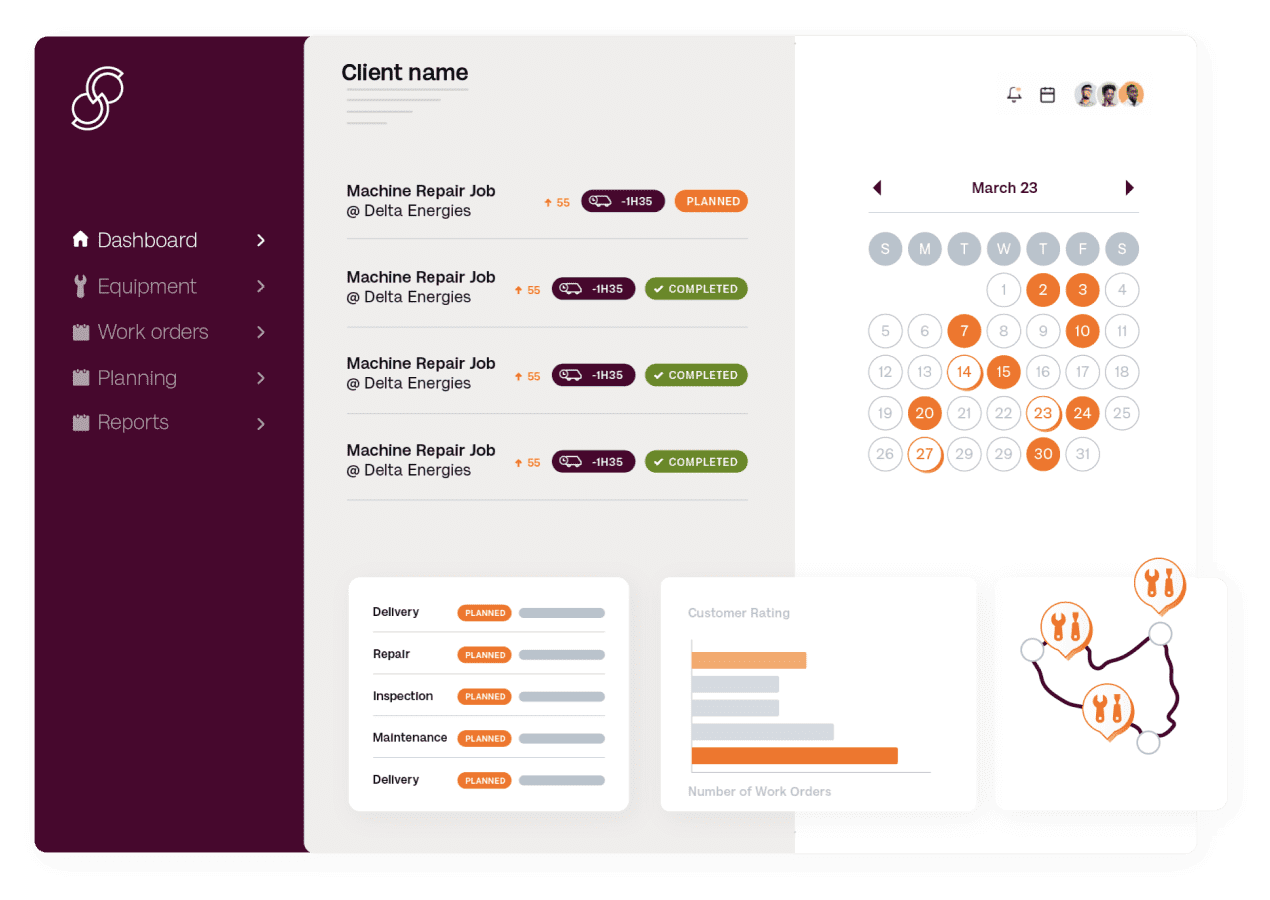
Installation base under control
As installation bases grow, complexity increases.
Assets are installed in one region and maintained in another.
Technicians change over time.
Components are replaced repeatedly.
Contracts evolve.
Regulatory inspections occur periodically.
Without structured lifecycle control, history becomes fragmented.
Wello keeps each asset connected to:
- All work orders
- Preventive maintenance plans
- Parts replacements
- Inspection documentation
- SLA obligations
- Warranty periods
This ensures that the service history of a machine remains complete, regardless of region or technician.
Serial-level and component traceability
In regulated and asset-heavy industries, tracking by equipment type is not sufficient. Individual devices and components must be identifiable.
Wello supports serial-level traceability and parent-child asset structures. This allows:
- Individual device tracking
- Component replacement history
- Reused equipment documentation
- Clear validation during audits
- Each unit retains its lifecycle record, even when moved between sites or branches.
Traceability does not depend on manual documentation habits. It is built into the structure.
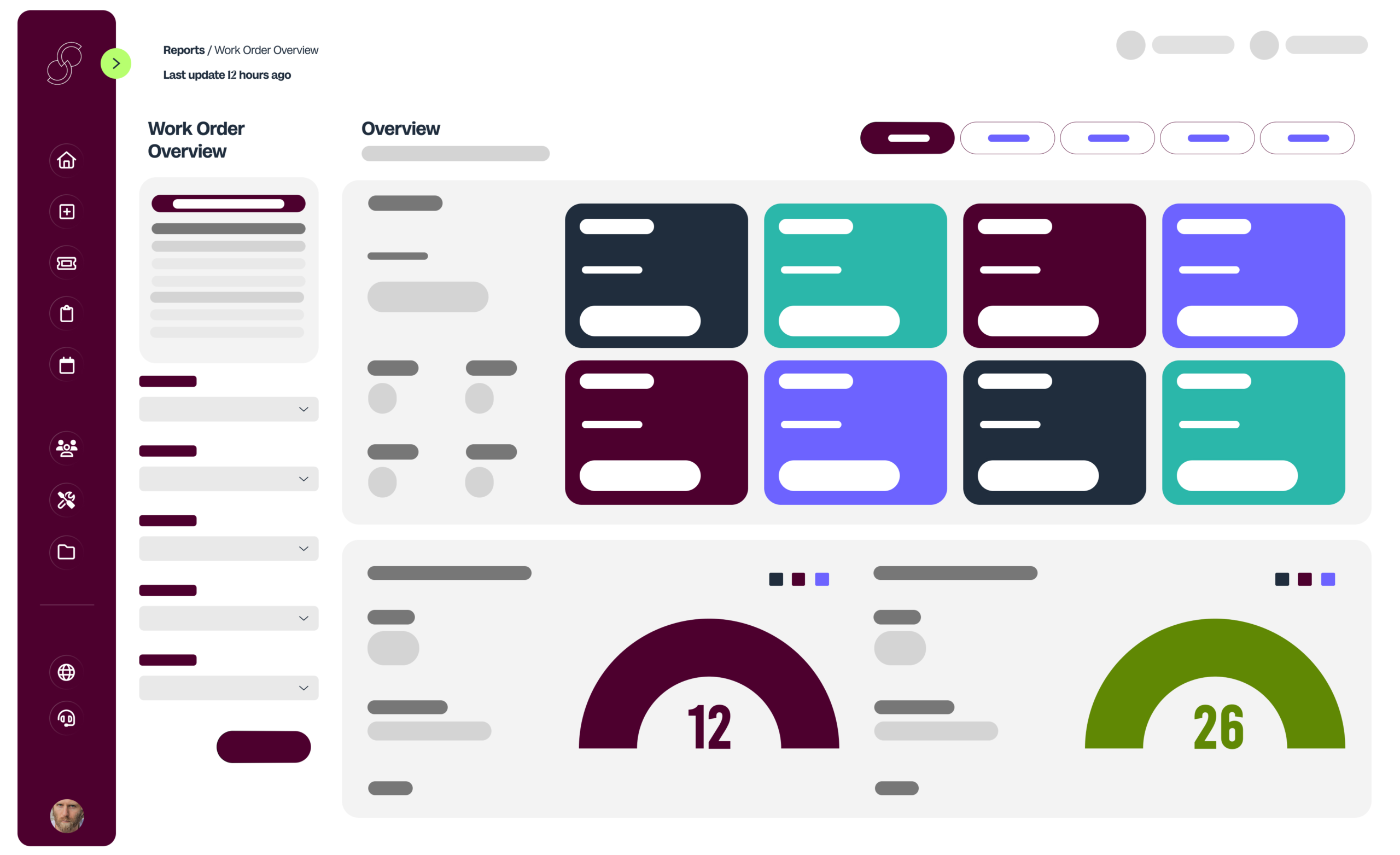
Work execution permanently linked to the asset
Every completed work order updates the asset record automatically.
Time spent, parts used, forms completed, signatures captured, and attachments remain permanently connected to the machine.
- If a component fails repeatedly over several years, the pattern is visible.
- If a site shows recurring technical deviations, the history supports analysis.
- If warranty coverage is questioned, records are accessible immediately.
The asset record reflects real execution, not summarized reports.
Structured hierarchy for complex installations
Industrial environments often include layered installations:
- Production sites
- Subsections within facilities
- Primary machines
- Subcomponents
- Connected devices
Wello allows this hierarchy to be defined clearly so that equipment relationships remain understandable as databases grow.
Assets can be organized logically without losing history when:
- Equipment is relocated
- Components are replaced
- Sites expand
- Branches merge
The structure remains stable even as the installation base evolves.
Asset data aligned with service and commercial processes
Asset lifecycle control does not operate in isolation.
- Warranty status influences billing decisions.
- Service contracts define maintenance scope.
- SLA commitments depend on asset classification.
- Parts usage affects inventory accuracy.
- Wello connects asset activity to operational and commercial workflows inside the same environment.
This reduces discrepancies between technical execution and financial processing.
Supporting compliance and audit readiness
In compliance-heavy industries, documentation must be consistent and retrievable.
Inspection certificates, service reports, measurement values, and approval signatures remain attached directly to the asset.
When documentation is requested — internally or externally — it can be retrieved by machine, serial number, site, or time period.
Audit preparation becomes structured retrieval rather than manual reconstruction.
Lifecycle control across regions
For organizations operating across multiple cities or countries, asset control must remain consistent.
Wello centralizes the installation base while allowing regional teams to execute locally. Asset history remains unified even when service delivery is distributed.
This ensures:
- Standardized documentation
- Cross-region visibility
- Consistent service logic
- Stable historical records
As technician teams grow, the asset structure remains intact.
Structured control, not asset tagging
Asset Lifecycle Control in Wello is not a simple equipment registry.
It is a structured system that connects machines, work execution, planning, contracts, and compliance into one continuous lifecycle record.
For service organizations managing complex installations at scale, this structure becomes foundational to operational stability.