
Preventive Maintenance
Plan maintenance correctly. Reduce unplanned interventions.
In structured service organizations, preventive maintenance is a contractual and operational foundation. It protects uptime, supports compliance, and stabilizes service delivery across regions.
When preventive maintenance is managed manually or outside the asset lifecycle, schedules drift. Inspections are missed. Documentation becomes inconsistent. Service levels weaken.
Wello structures preventive maintenance directly within the asset record, ensuring that every scheduled activity remains visible, documented, and aligned with service agreements.

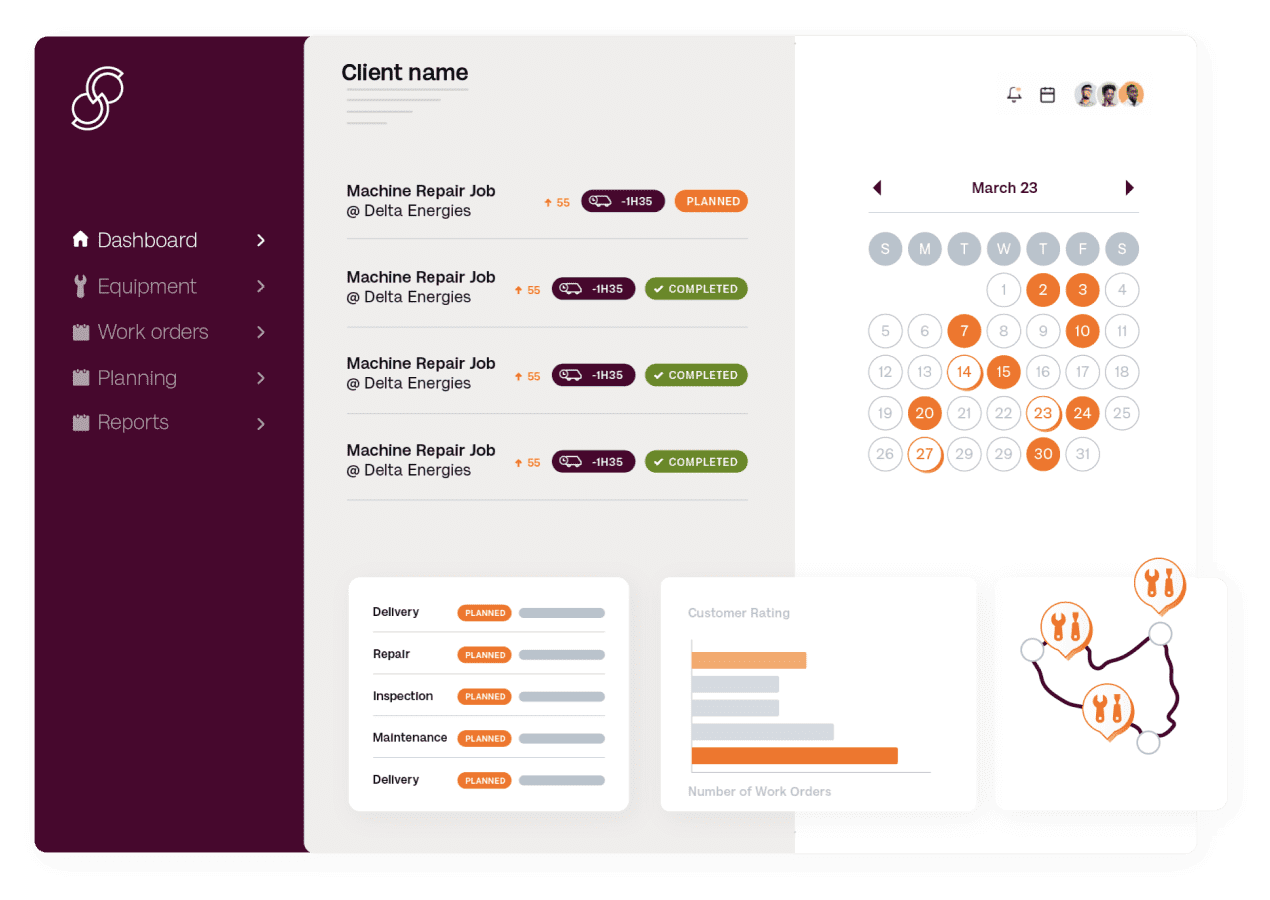
Maintenance linked to the asset, not the calendar
Preventive maintenance should not rely on isolated calendar reminders or spreadsheets.
In Wello, maintenance schedules are defined at equipment level. Each asset can have its own interval logic based on contract terms, technical requirements, or regulatory obligations.
- Different assets follow different frequencies.
- Multiple schedules can apply to the same machine.
- Maintenance plans evolve without losing history.
When preventive work orders are generated, they are permanently linked to the asset. Each inspection, checklist, and signature becomes part of the documented lifecycle.
Maintenance activity remains structured, even as the installation base grows.
Consistent execution across regions
As service teams expand, maintaining consistent preventive processes becomes more difficult.
Wello automatically attaches predefined forms and checklists to preventive work orders. Technicians follow a standardized structure regardless of branch or location.
- Inspection values are captured in defined fields.
- Required documentation cannot be skipped.
- Signatures are stored digitally.
- Preventive visits remain comparable across regions and over time.
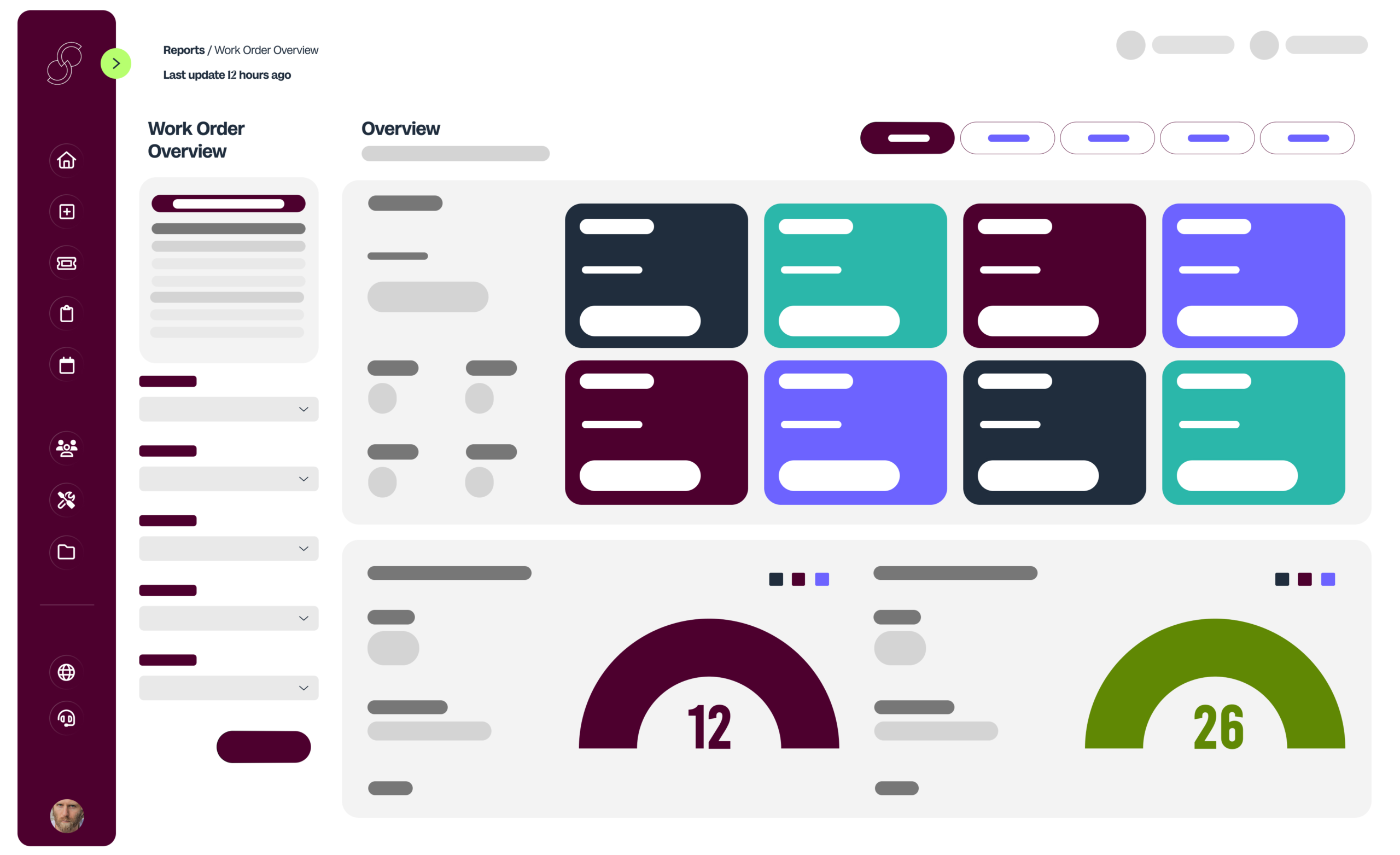
Preventive at the core of maintenance management
While preventive maintenance remains the foundation, it operates alongside corrective and predictive activities.
Corrective interventions are recorded within the same asset lifecycle when unexpected failures occur. This ensures that reactive repairs are fully traceable and visible in context with scheduled maintenance.
Predictive insights, generated from service history, inspection data, and parts usage patterns, help refine preventive intervals over time. When recurring issues are detected, schedules can be adjusted before breakdowns escalate.
By connecting preventive, corrective, and predictive activities within one structured system, maintenance remains continuous rather than fragmented.
Preventive stays central, but it is informed by real execution data.
Integrated into daily planning
Preventive work orders appear directly within the planning environment alongside corrective interventions.
Planners can balance scheduled maintenance with urgent repairs without switching systems. Capacity planning remains realistic, and preventive work does not get postponed due to lack of visibility.
Maintenance becomes part of daily operational flow rather than a separate administrative task.
Clear documentation for compliance environments
In regulated industries, preventive maintenance documentation must remain complete and retrievable.
Inspection reports, measurements, photos, and approvals remain linked to the asset. When documentation is requested, it can be retrieved by machine, period, or inspection type without manual reconstruction.
Preventive maintenance supports both operational reliability and compliance confidence.
Structured maintenance at scale
As installation bases grow and contracts multiply, preventive maintenance complexity increases.
Wello keeps this complexity organized by connecting schedules, execution, documentation, and asset history within one environment.
- Preventive maintenance remains visible.
- Corrective repairs remain contextualized.
- Predictive adjustments remain data-driven.
Maintenance management becomes structured rather than reactive.