Connecting Operational Service Execution with Financial Systems
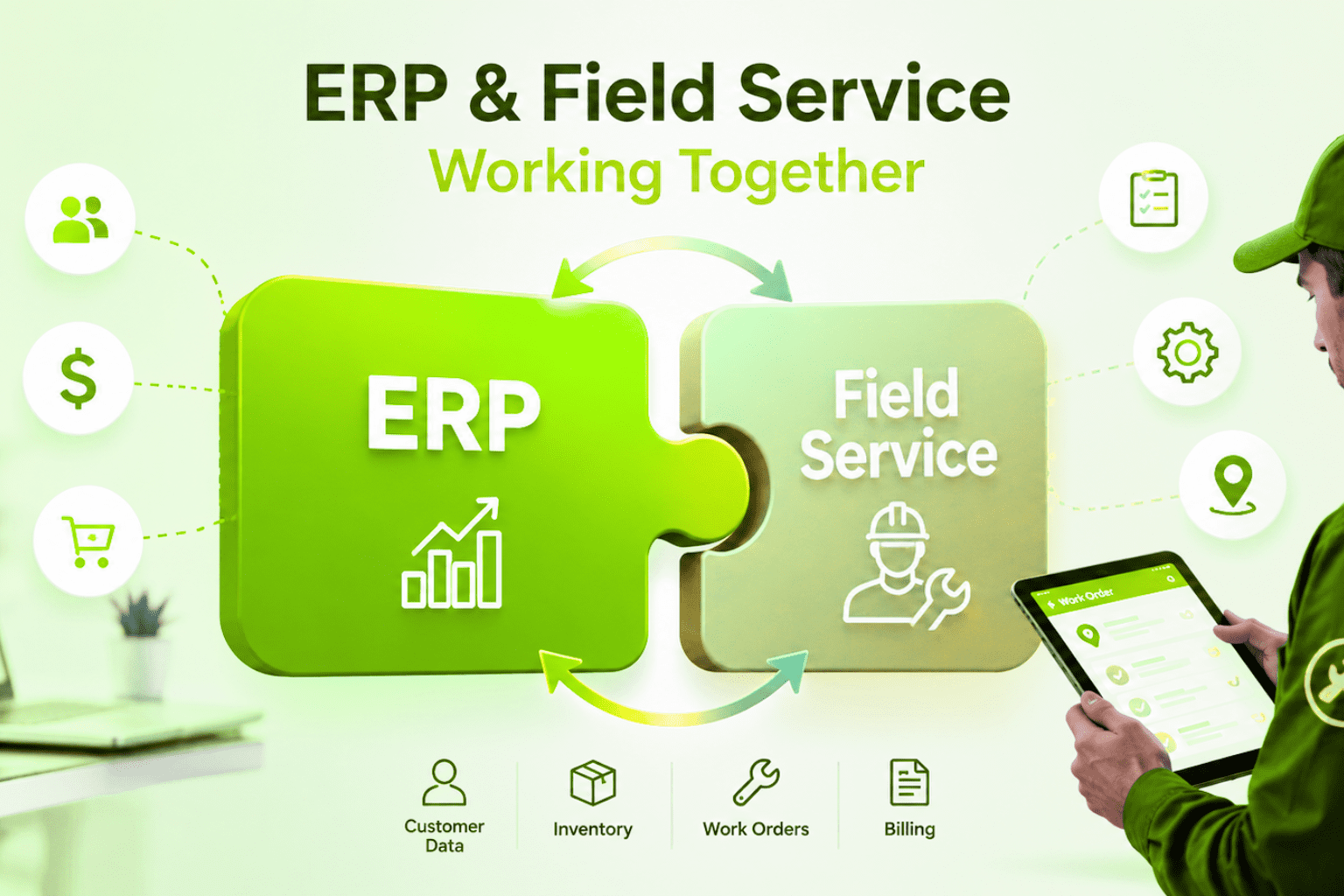
Organizations that install, maintain, and repair machines operate through several operational systems. Field service platforms coordinate technicians, work orders, maintenance schedules, and equipment records. Enterprise Resource Planning systems manage financial operations, inventory accounting, procurement, and customer billing.
Both systems play an important role in service organizations, but they serve different purposes.
Field service platforms manage operational execution. ERP systems manage financial and administrative processes.
When these two systems operate independently, organizations often encounter inefficiencies. Information must be transferred manually between systems. Administrative teams may need to reenter data such as parts usage, service reports, or labor time.
Connecting ERP and field service platforms allows service operations and financial systems to function as a coordinated environment.
This integration helps organizations maintain consistency between operational activity and financial records while reducing administrative effort.
Understanding the role of ERP systems
ERP systems act as the financial backbone of many organizations. They manage accounting processes, procurement, inventory management, and financial reporting.
Customer accounts are maintained within ERP environments. Financial transactions such as invoices, purchase orders, and supplier payments are recorded through ERP systems.
Inventory levels are also typically managed within ERP platforms. Spare parts, warehouse stock, and procurement activities are tracked through inventory modules.
For organizations providing equipment maintenance services, ERP systems therefore handle the financial side of service operations.
However, ERP systems are not designed to manage daily technician coordination or service execution workflows.
This operational role belongs to field service platforms.
The role of field service platforms
Field service platforms focus on managing service activity in the field.
These systems coordinate technicians, schedule maintenance interventions, and maintain equipment lifecycle records.
Work orders are created when maintenance visits must occur or when service requests are received.
Planning teams assign technicians based on availability, location, and required technical skills.
Technicians perform service interventions at customer locations and record service reports, inspection results, and parts usage directly within the platform.
Equipment history accumulates over time, providing visibility into maintenance activity performed on each machine.
While these operational activities generate valuable information, this data must also connect with financial systems.
ERP integration enables this connection.
Why integration becomes necessary
When service platforms and ERP systems operate independently, organizations must manage data flows manually.
For example, when technicians record parts usage during a repair intervention, the inventory system must reflect that change.
Without integration, administrative staff must update inventory records manually.
Similarly, when service interventions generate billable labor or materials, finance teams must reference service reports to prepare invoices.
Manual data transfer creates inefficiencies and increases the risk of errors.
Integration between field service platforms and ERP systems allows this information to flow automatically.
Operational data recorded in the service platform can update financial systems without manual intervention.
This improves accuracy and reduces administrative workload.
Synchronizing customer information
Customer records typically originate in ERP systems.
These records contain billing information, company details, and contractual agreements.
When ERP systems integrate with field service platforms, customer data can synchronize automatically.
Service platforms receive updated customer records that planners and technicians can reference during service operations.
Technicians arriving at a customer site can view relevant account information directly within the service platform.
Because the ERP system remains the authoritative source of financial records, customer data stays consistent across both systems.
Aligning equipment installations with customer accounts
Many service organizations maintain installation bases consisting of machines installed at customer locations.
These installations must be associated with customer accounts managed within ERP systems.
Integration allows equipment records maintained in the service platform to remain linked with customer data stored in the ERP environment.
When technicians perform maintenance on a machine, the work order becomes associated with the correct customer account.
This connection ensures that service activity can later contribute to billing processes or service contract verification.
Linking equipment records with ERP customer data improves operational traceability.
Managing spare parts and inventory data
Spare parts represent a significant operational component of equipment maintenance.
Technicians may replace sensors, valves, electronic components, or mechanical parts during service interventions.
Inventory levels for these parts are typically managed within ERP systems.
Integration allows parts usage recorded in work orders to update inventory records automatically.
When technicians register parts used during a repair, the service platform transmits the information to the ERP system.
Inventory levels adjust accordingly.
This synchronization ensures that warehouse stock remains accurate and visible across the organization.
Accurate inventory data also helps procurement teams maintain appropriate stock levels.
Supporting billing and invoicing processes
Many service interventions generate billable activity.
Service contracts may include predefined maintenance visits, but additional repairs or emergency interventions may involve labor and materials that must be invoiced.
Field service platforms capture the operational details of these interventions.
Technicians record the time spent on the intervention, the parts used, and the outcome of the service visit.
ERP integration allows this operational data to support financial processes.
Billing teams can generate invoices based on service data recorded during the intervention.
Because the information originates from the work order itself, invoicing becomes more accurate and transparent.
This connection between operational service activity and financial systems improves revenue tracking.
Managing service contracts and financial alignment
Service contracts often define long term maintenance agreements between service providers and customers.
These contracts may involve recurring service visits and predefined billing structures.
While the operational execution of maintenance occurs within the service platform, financial records related to the contract remain within the ERP system.
Integration allows both systems to remain aligned.
Maintenance visits recorded in the service platform confirm that contractual obligations have been fulfilled.
ERP systems maintain financial records associated with contract billing.
This connection allows organizations to monitor service contract performance from both operational and financial perspectives.
Improving visibility across departments
Integration between ERP and service platforms improves communication between operational and financial teams.
Service teams focus on technician coordination, maintenance planning, and equipment reliability.
Finance teams focus on billing, procurement, and financial reporting.
When both systems share information, departments gain visibility into each other's activities.
Finance teams can see which service interventions generated billable activity.
Service managers can review contract information and customer account details stored in the ERP system.
This shared visibility improves coordination between departments and reduces administrative friction.
Supporting operational reporting
Integrated systems also enable more comprehensive reporting.
Organizations can analyze both operational and financial data together.
Managers may review metrics such as:
Service revenue generated from maintenance operations
Inventory consumption related to service interventions
Technician productivity and labor utilization
Financial performance of service contracts
Combining operational and financial information provides deeper insights into service performance.
Organizations can identify opportunities to improve efficiency, adjust maintenance programs, or refine service offerings.
Building connected enterprise service environments
Modern service organizations depend on connected digital systems to manage complex operations.
Field service platforms coordinate technicians, work orders, and equipment maintenance.
ERP systems manage financial records, procurement activities, and inventory accounting.
Integration between these systems ensures that operational service activity remains aligned with financial processes.
Customer records, parts usage, service reports, and billing information can flow between systems automatically.
Platforms such as Wello support this connected architecture by allowing service workflows to integrate with enterprise ERP environments.
For organizations maintaining machines across large installation bases, this integration provides the structure required to manage service operations efficiently while maintaining financial transparency.