Understanding the purpose of Scope 12 requires examining how solar installations operate. A photovoltaic system converts sunlight into electricity using solar panels connected through electrical components such as inverters, cabling, connectors, and mounting structures. These systems are typically connected to the building’s electrical infrastructure, allowing the generated power to be used on site or fed into the grid.
Although solar installations are designed for long term operation, they contain multiple electrical components that must function correctly to maintain safe performance. Loose connectors, damaged cables, overheating components, or installation errors can create electrical faults. In worst case scenarios, these faults may cause overheating or arcing that can lead to fire incidents.
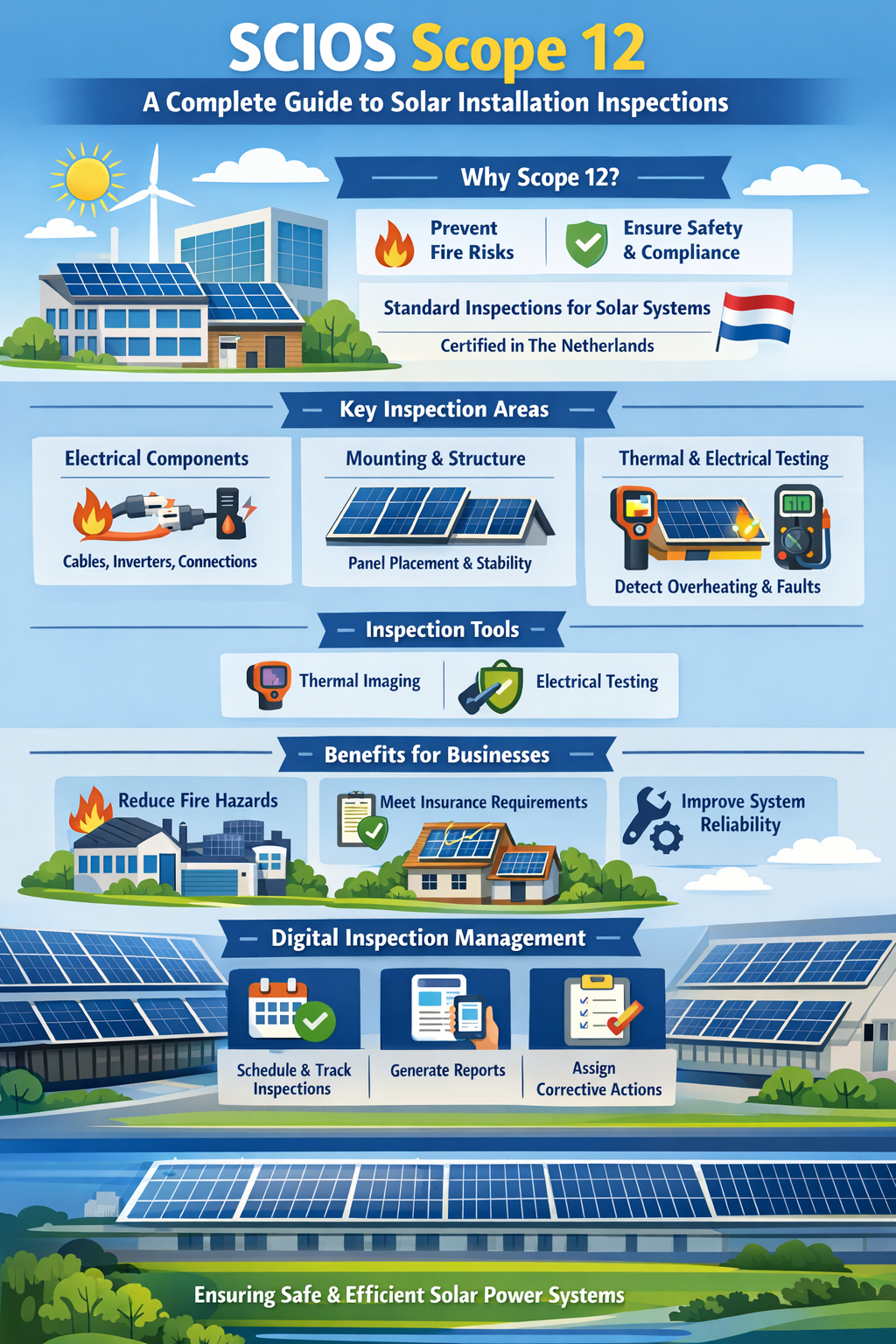
Because these risks exist within electrical systems that are often installed on roofs or large building surfaces, detecting problems early is essential. Scope 12 inspections focus on identifying these risks before they escalate into serious incidents. Inspectors examine the installation from both a structural and electrical perspective to determine whether the system meets safety and technical standards.
A Scope 12 inspection typically evaluates several key elements of a solar installation. Inspectors review the design and configuration of the photovoltaic system to ensure that the components are installed correctly and comply with technical guidelines. Electrical connections, cabling, and connectors are inspected for signs of wear, overheating, or improper installation. Mounting structures and panel positioning are also examined to ensure structural stability.
In addition to visual inspection, specialized diagnostic tools may be used during the assessment. Thermal imaging cameras can detect overheating components or irregular temperature patterns that may indicate electrical faults. Electrical measurements can verify that the system operates within expected voltage and current ranges. These diagnostic techniques allow inspectors to identify potential risks that may not be visible during a standard visual inspection.
The inspection process also evaluates the overall condition of the installation and its compliance with applicable standards. Documentation such as installation records, technical drawings, and maintenance history may be reviewed to confirm that the system was installed and maintained according to recognized guidelines. When issues are identified, inspectors provide recommendations for corrective actions to restore the system to a safe operating condition.
Insurance companies have played an important role in promoting Scope 12 inspections. Because solar installations are often installed on large commercial buildings, the potential financial impact of fire incidents can be significant. Insurers therefore encourage or require Scope 12 inspections as part of their risk management requirements. Businesses that operate solar installations may need to demonstrate that their systems have been inspected according to Scope 12 standards to maintain insurance coverage.
For installation companies and inspection organizations, Scope 12 has also created a structured framework for evaluating photovoltaic systems. By establishing standardized inspection procedures, the program ensures that inspections are performed consistently across different installations. This consistency helps building owners, insurers, and regulators trust the results of the inspection process.
The growth of solar energy across Europe means that Scope 12 inspections will likely become increasingly relevant for commercial and industrial facilities. As more buildings install photovoltaic systems, maintaining the safety and reliability of these installations becomes a priority. Regular inspections help identify problems early, extend the lifespan of the system, and ensure that installations continue to operate safely.
Managing inspection activities for solar installations also requires efficient coordination between inspection teams, service companies, and building operators. Many organizations responsible for performing these inspections rely on digital service management systems to plan and document their work. These systems allow inspection companies to schedule site visits, assign qualified inspectors, and capture inspection reports directly in the field.
Field service management platforms such as Wello help inspection companies manage these workflows efficiently. Inspectors can receive work orders, access installation details, record inspection findings, and generate structured reports directly from a mobile application. Digital documentation ensures that inspection results are stored securely and can be accessed for future audits or maintenance planning.
Digital tools also support better visibility into inspection history and compliance status. For organizations responsible for maintaining multiple solar installations across different sites, tracking inspection schedules manually becomes difficult. A centralized platform allows companies to monitor which installations require inspection, record inspection outcomes, and maintain compliance records in one system.
The integration of digital service platforms with inspection processes also improves communication between inspection teams and facility managers. When inspectors identify issues during a Scope 12 assessment, corrective tasks can be created immediately and assigned to the appropriate service teams. This reduces delays in addressing safety risks and ensures that installations remain compliant with inspection standards.
As the adoption of solar energy continues to accelerate, maintaining the safety and reliability of photovoltaic systems will remain a critical responsibility for businesses. Programs such as SCIOS Scope 12 provide a structured approach for evaluating solar installations and preventing potential fire risks. By combining standardized inspection procedures with modern digital management tools, organizations can ensure that their solar installations operate safely and efficiently over the long term.
SCIOS Scope 12 represents an important step toward safer solar energy infrastructure. For businesses operating solar installations, understanding the purpose and requirements of this inspection program helps protect their facilities, reduce operational risks, and maintain compliance with insurance and safety standards.