
Reporting & Intelligence
Turn operational data into structured decision support.
Service organizations generate large volumes of data through daily execution. Work orders, maintenance activity, SLA performance, parts usage, technician allocation, and asset history all contain measurable information.
When this data remains fragmented or requires manual extraction, decision-making slows down.
Wello connects reporting directly to live operational data so that managers work with accurate and current information across the installation base.

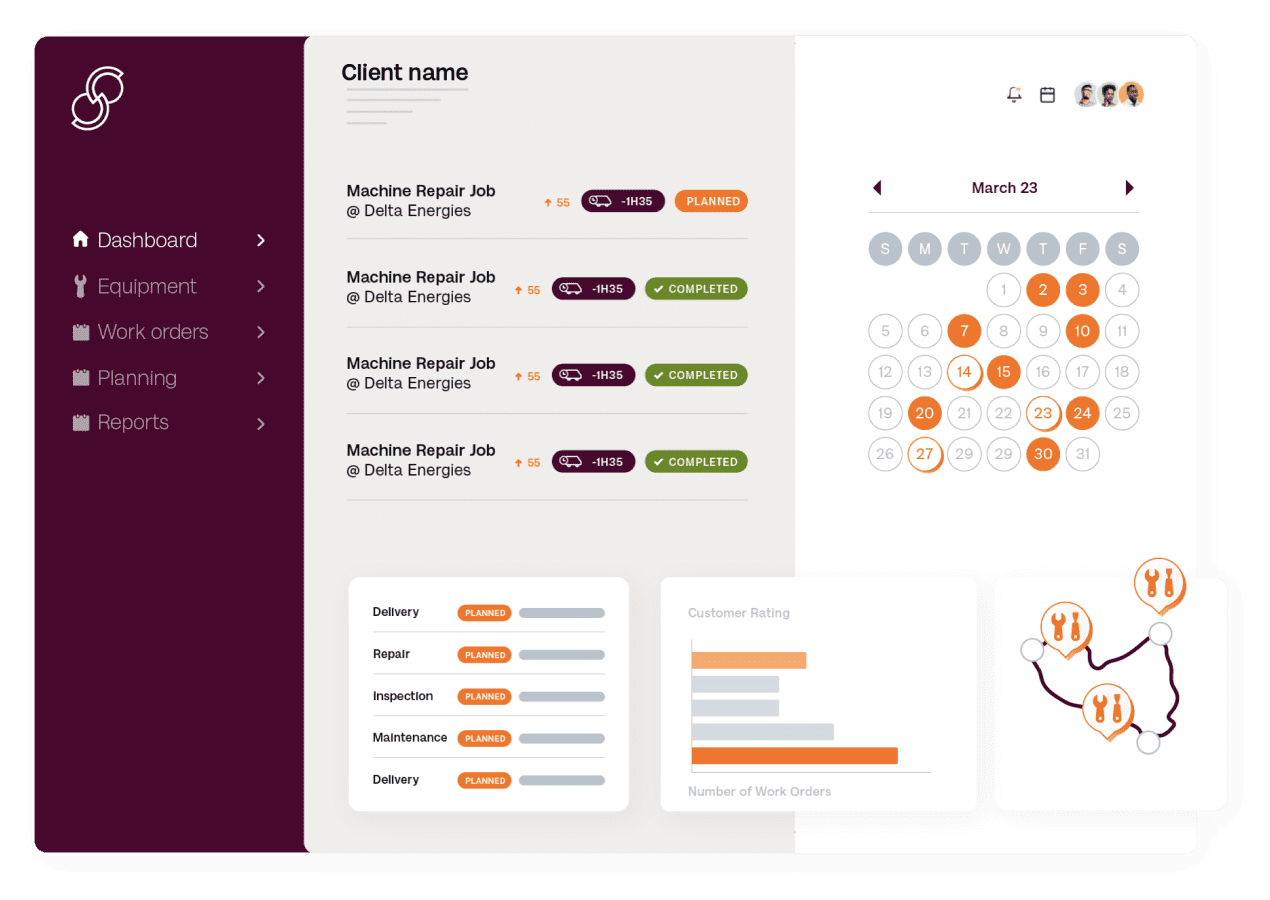
Reporting built on real execution data
All reporting in Wello is based on structured operational activity.
- Work order completion times
- Preventive maintenance adherence
- SLA response and resolution performance
- Parts consumption
- Technician workload distribution
- Asset intervention frequency
Because assets, planning, contracts, and execution operate inside one system, reporting does not require merging external data sources.
The numbers reflect real service activity, not manually consolidated spreadsheets.
Asset reliability visibility
For asset-heavy organizations, understanding equipment behavior over time is essential.
Wello allows service managers to review intervention frequency per asset, recurring component replacements, and maintenance history across sites.
This helps identify:
- Machines with increasing failure patterns
- Sites with recurring technical issues
- Components requiring closer monitoring
Asset reliability becomes measurable rather than anecdotal.
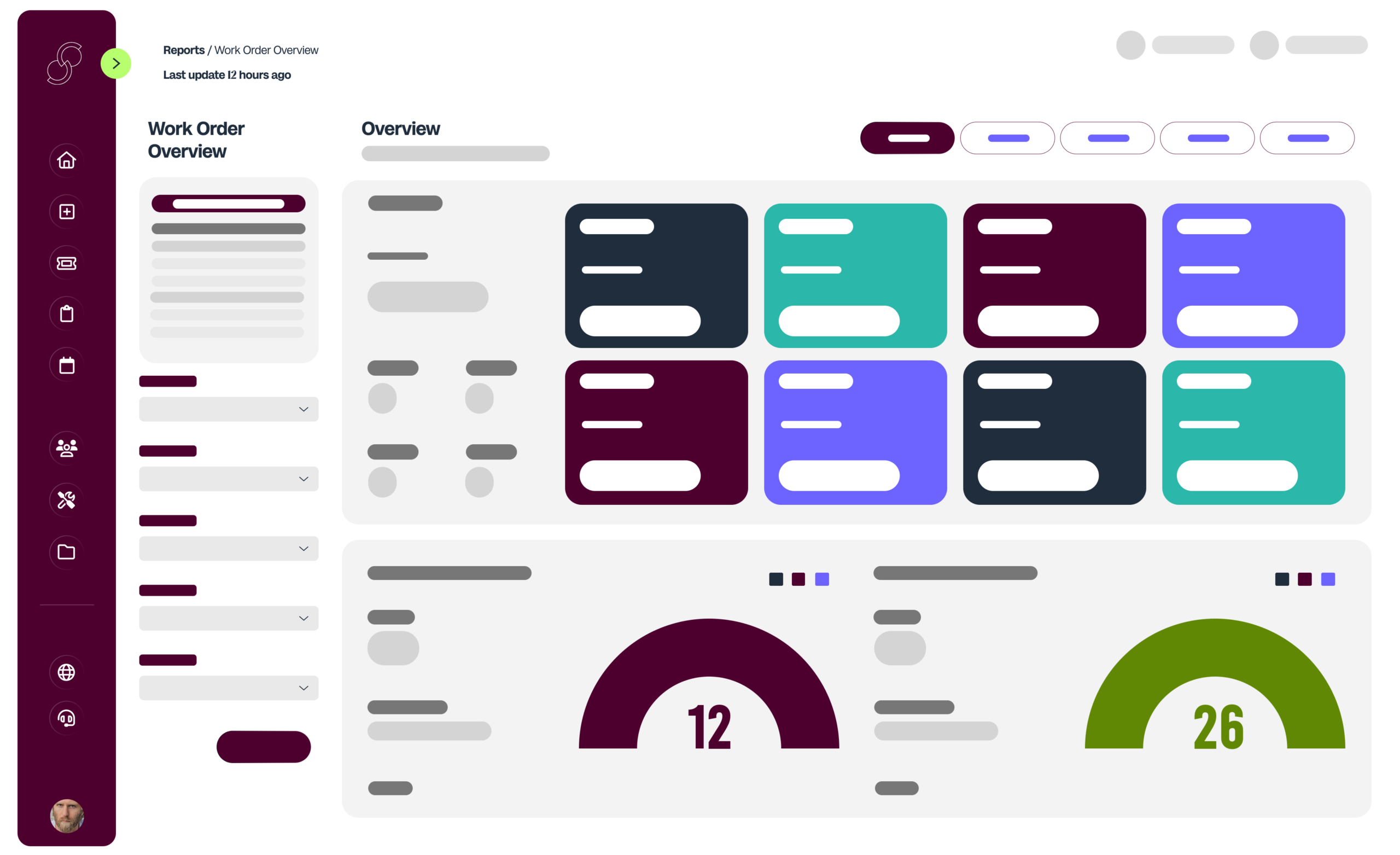
SLA and contract performance tracking
Service Level Agreements and contractual obligations can be monitored through structured reporting.
Managers can evaluate response time compliance, resolution performance, and recurring SLA pressure points across customers or regions.
This provides clarity on where performance is stable and where adjustments may be required.
Because SLA logic is embedded in work orders and contracts, reporting reflects actual service delivery.
Cross-region operational comparison
In multi-region environments, visibility across branches is critical.
Wello allows organizations to review performance metrics per region, per team, or per customer segment.
This supports:
- Identification of operational differences
- Standardization of service quality
- Better capacity planning
- Consistent service delivery across locations
Performance can be analyzed at both local and organizational level.
Technician workload and productivity insight
Planning stability depends on understanding how work is distributed.
Wello provides structured visibility into technician activity, workload balance, and job completion patterns.
This supports informed decisions about:
- Capacity adjustments
- Skill allocation
- Regional expansion
- Recruitment needs
Data replaces assumption when evaluating team performance.
Business intelligence connectivity
Wello allows integration with external Business Intelligence tools when deeper analysis is required.
Operational data can be accessed without compromising system performance or security.
Organizations that require advanced reporting environments can connect structured service data to their preferred BI platform while maintaining consistency with operational records.
From data storage to operational clarity
Many systems store service data. Few organize it in a way that supports structured decision-making.
By connecting assets, planning, contracts, work orders, and SLA logic within one platform, Wello ensures that reporting reflects the full service lifecycle.
Managers gain visibility into reliability trends, contractual performance, resource allocation, and maintenance effectiveness without manual data reconstruction.
Reporting becomes part of operational control rather than a separate analytical task.