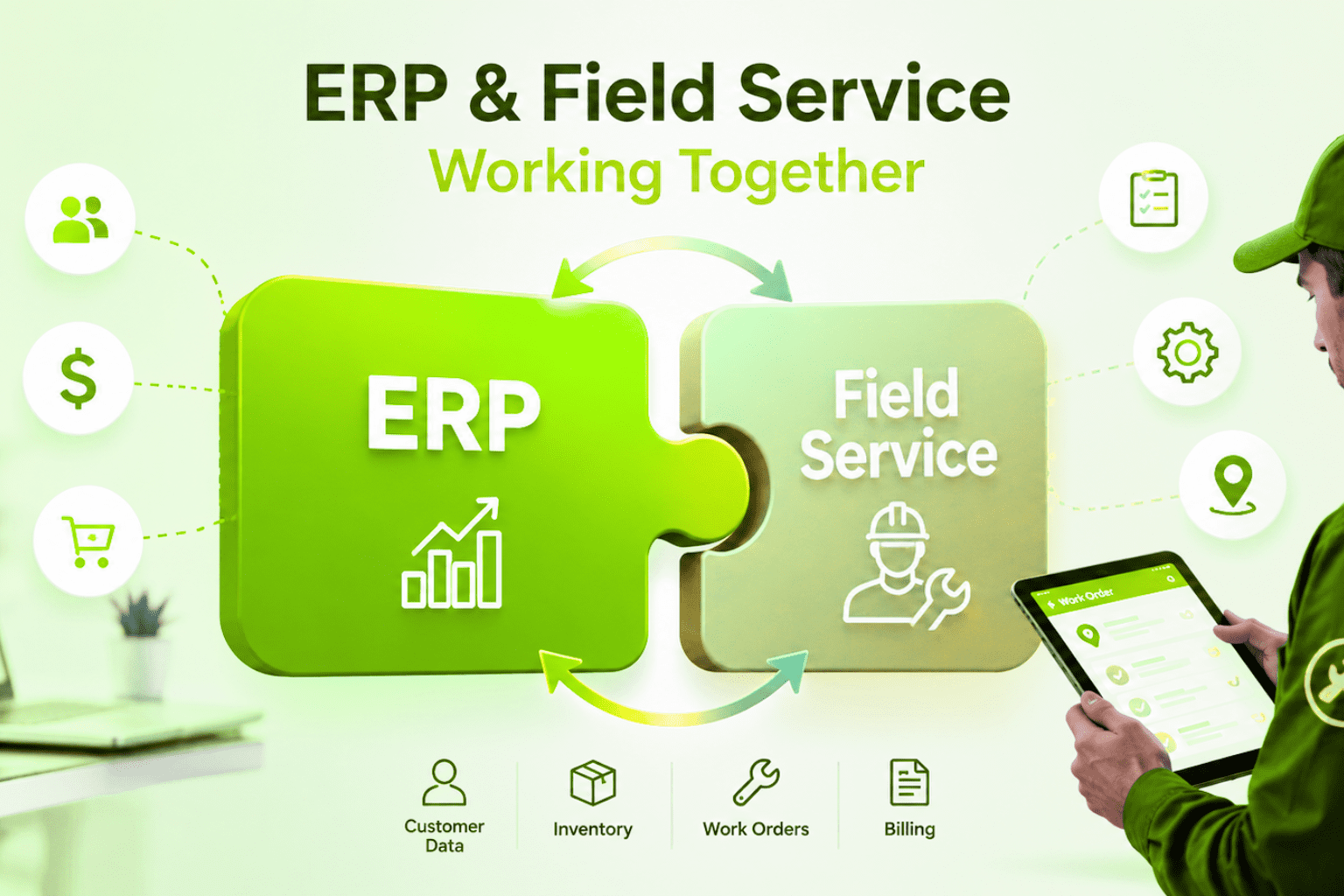

What is real-time integration between FSM and Odoo?
Real-time integration between Field Service Management (FSM) software and Odoo means that data is exchanged instantly between both systems as soon as an event happens.
When a technician completes a job, updates a task, or uses parts in the field, that information is immediately reflected in Odoo without waiting for manual updates or scheduled data transfers.
This creates a continuous connection between field operations and business systems.
How does real-time FSM and Odoo integration work?
Real-time integration works through API-based communication between both platforms.
Instead of sending data in batches every few hours or once a day, the systems react instantly to events.
For example:
A work order is completed in FSM → Odoo receives the data immediately
A customer is created in Odoo → it appears instantly in FSM
Pricing is updated in Odoo → FSM reflects the change in real time
Each action triggers a direct update, keeping both systems aligned at all times.
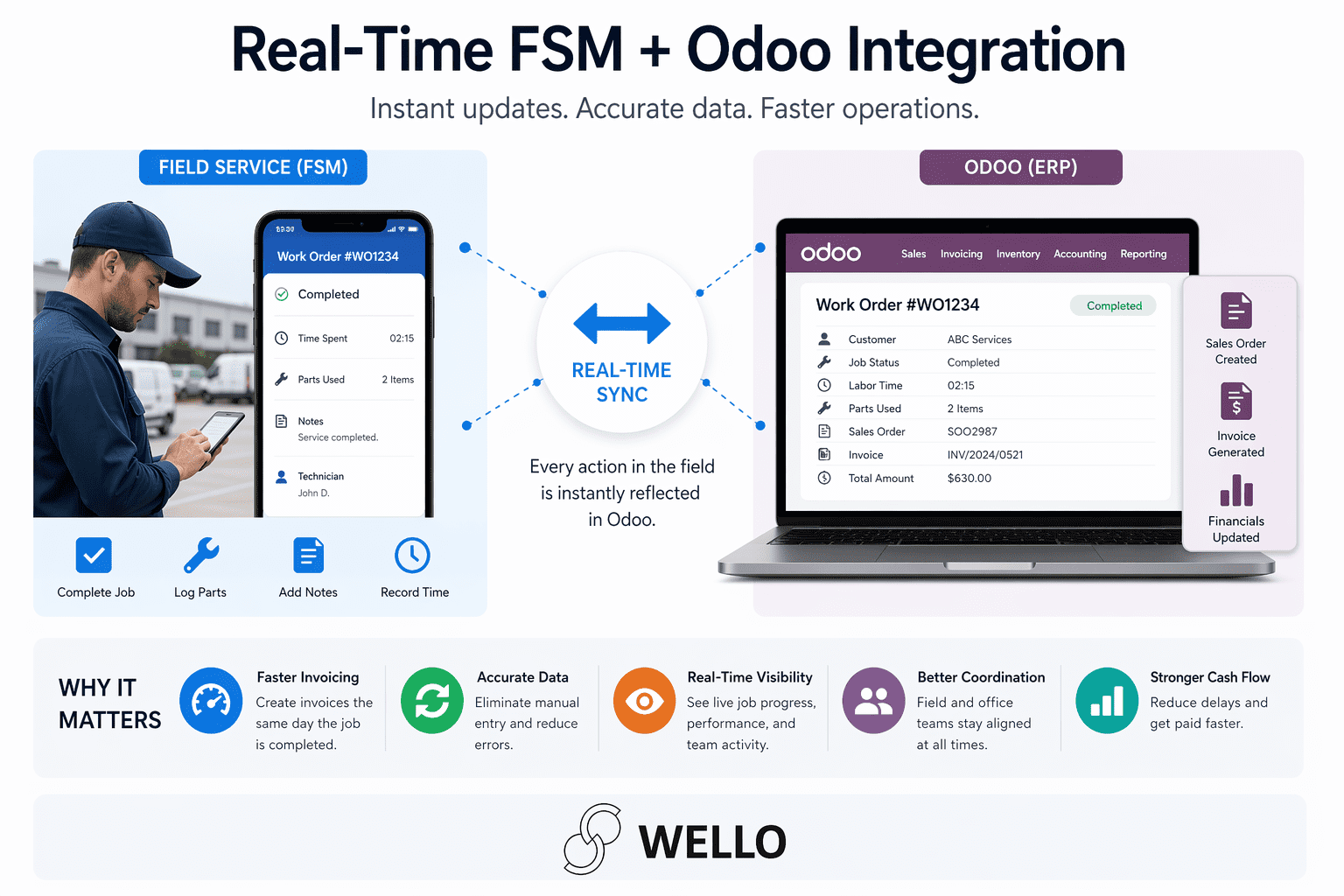
Real-time FSM and Odoo integration
What is the difference between real-time and batch integration?
In batch integration, data is transferred at fixed intervals. This means systems can be out of sync for hours or even days.
In real-time integration, data is updated instantly.
The difference is critical for service companies:
Batch integration:
- Delayed invoicing
- Outdated customer or job data
- Manual corrections
- Real-time integration:
- Immediate updates
- Accurate data across systems
- Faster decision-making
For field service operations, real-time integration is no longer optional once operations scale.
Why real-time integration matters for field service companies
Field service operations depend on speed and accuracy.
Technicians are constantly updating job status, using parts, and completing work. If this information does not reach the office in real time, delays appear across the entire operation.
With real-time FSM + Odoo integration:
- Dispatchers see live job progress
- Finance teams receive billing data instantly
- Managers track performance as it happens
- Customers receive faster service updates
This improves coordination between teams and reduces operational friction.
Real example: what happens during a service job
To understand the impact, look at a typical workflow.
A technician completes a maintenance job using FSM software like Wello.
At that moment:
- Time spent is recorded
- Parts used are logged
- Service notes are added
With real-time integration:
- The work order is instantly sent to Odoo
- A sales order or invoice is created
- Pricing rules are applied automatically
- Financial records are updated
There is no delay between execution and billing.
How Wello enables real-time integration with Odoo
Wello is built to support real-time operations in the field.
It connects with Odoo through a native API-based integration that allows continuous data exchange between systems.
You can explore the connector here: https://apps.odoo.com/apps/modules/15.0/wello-odoo-connector
And see how it works in practice here: https://wello.solutions/integrations/odoo/
What updates in real time?
From Odoo to Wello:
- Customers and contacts
- Products and categories
- Price lists and pricing rules
From Wello to Odoo:
- Completed work orders
- Labor time and activities
- Parts and materials used
- Technician reports and notes
This ensures both systems reflect the same data at the same moment.
How real-time integration improves billing speed
One of the biggest impacts of real-time integration is faster invoicing.
In many companies, there is a delay between job completion and invoice creation. This delay is caused by manual validation, data entry, or waiting for reports.
With real-time integration:
- Work orders are processed immediately
- Sales orders or invoices are created automatically
- Pricing is applied without manual checks
Many companies reduce billing delays from several days to same-day invoicing.
This has a direct impact on cash flow.
How real-time data improves decision-making
Real-time integration gives managers access to live operational data.
They can:
- Monitor technician productivity
- Track job completion rates
- Identify delays or bottlenecks
- Adjust planning in real time
This level of visibility is not possible with delayed or batch-based systems.
Who needs real-time FSM and Odoo integration?
Real-time integration is essential for companies that:
- Manage high volumes of work orders
- Operate across multiple locations
- Have distributed field teams
- Need accurate and fast invoicing
- Use Odoo as their ERP or CRM system
For these companies, delays in data flow directly affect performance and revenue.
Common challenges without real-time integration
Without real-time integration, companies often face:
- Manual data transfer between systems
- Inconsistent or outdated information
- Delayed billing and cash flow issues
- Poor visibility into operations
- Increased risk of errors
These issues grow as the business scales.
What to look for in a real-time Odoo FSM integration
Not all integrations are truly real-time.
When evaluating a solution, make sure it offers:
- Event-based data synchronization
- Two-way communication between systems
- Support for pricing and invoicing logic
- Reliable API connection
- Minimal delay between actions and updates
A native connector like Wello ensures these conditions are met.
Summary
Real-time integration between FSM software and Odoo connects field operations with business systems without delay.
Every action in the field is instantly reflected in Odoo, from work completion to invoicing.
This improves speed, accuracy, and visibility across the organization.
For service companies using Odoo, real-time integration with a field service platform like Wello is one of the most effective ways to simplify operations and improve performance.