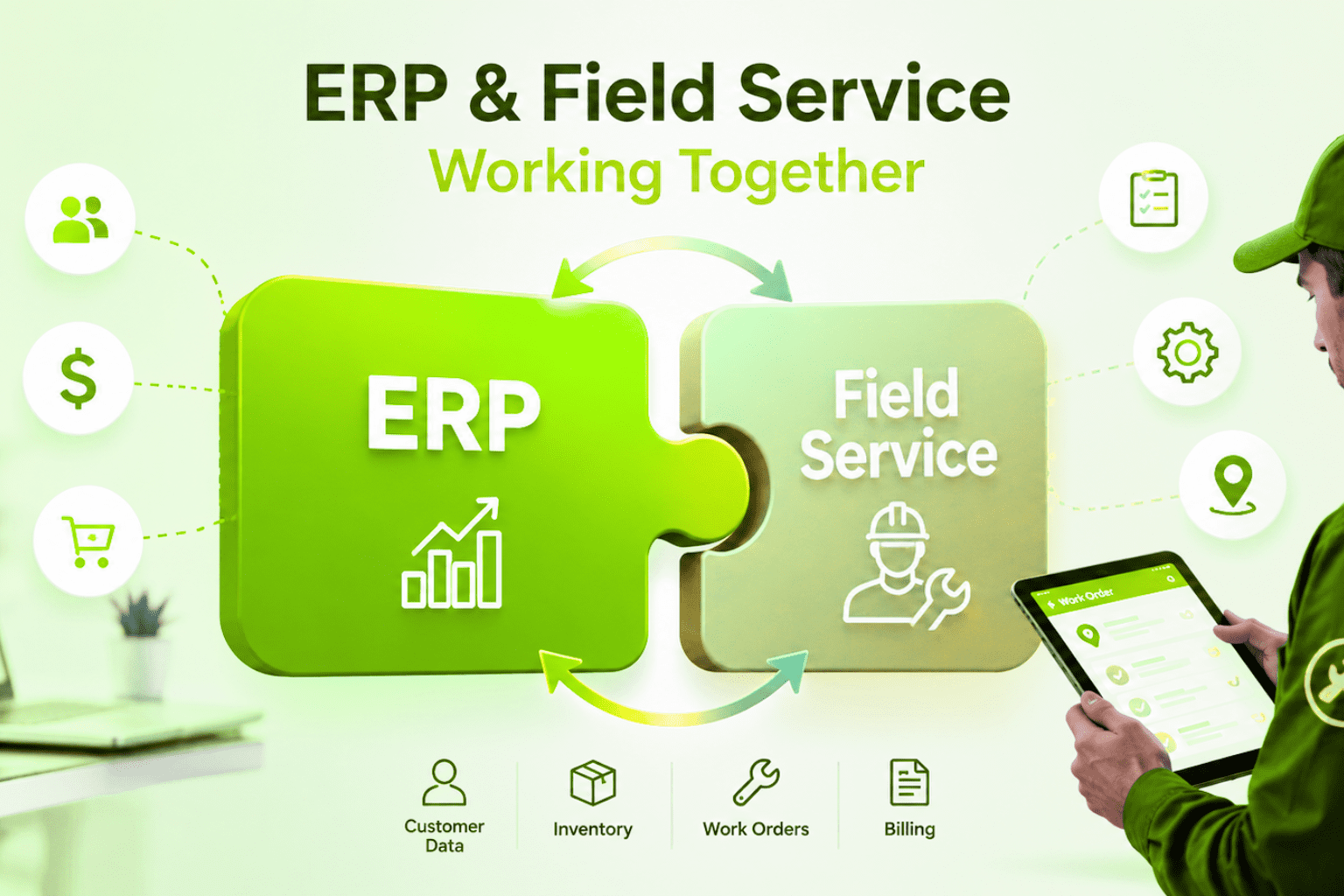

What is the difference between Odoo and Field Service Management software?
Odoo is an ERP system designed to manage business processes such as CRM, accounting, inventory, and sales. Field Service Management (FSM) software is built specifically to manage field operations like scheduling, dispatching, work orders, and technician activity.
In simple terms, Odoo manages the business, while FSM software manages the work happening in the field.
Most service companies need both.
Can Odoo handle field service management?
Yes, Odoo offers field service capabilities. It can manage basic tasks such as scheduling, assigning jobs, and tracking work orders.
However, in real operations, companies often find limitations when they scale:
- Limited mobile experience for technicians
- Basic planning and dispatching features
- Less flexibility for complex service workflows
- Limited real-time operational visibility
For companies handling a high volume of jobs or operating across multiple locations, these limitations become operational bottlenecks.
What does dedicated FSM software do better than Odoo?
Field Service Management software like Wello is built specifically for teams working outside the office.
It focuses on execution, not just structure.
FSM software typically provides:
- Advanced scheduling and dispatching
- Technician-first mobile applications
- Real-time job tracking and updates
- Work order management built for field use
- Service reports generated directly from the field
- Better handling of assets, equipment, and locations
This allows field teams to work faster, with fewer errors, and with full visibility.
Where does Odoo perform better than FSM software?
Odoo remains strong on the business side.
It is designed to handle:
- Customer relationship management
- Product and pricing management
- Financial operations and invoicing
- Sales orders and contracts
- Inventory and procurement
This makes it a solid system of record for business processes.
Why using Odoo alone is not enough for service companies
Many companies start by trying to manage everything inside Odoo. It works at the beginning, but as operations grow, gaps appear.
Field teams need speed, simplicity, and access to real-time data. Office systems are not designed for that level of execution.
This leads to common issues:
- Technicians working with outdated information
- Manual updates between field and office
- Delays between job completion and invoicing
- Inconsistent data across systems
These problems slow down operations and affect revenue.
Why combining Odoo with FSM software is the best approach
The most effective setup is not choosing between Odoo and FSM software. It is combining both.
Odoo handles business processes. FSM software handles field execution.
When connected, they create a complete system:
- Customer and pricing data flows from Odoo to FSM
- Work orders are executed in the field using FSM
- Completed jobs are sent back to Odoo for invoicing
This removes the gap between operations and finance.
If you want to see how this works in practice, you can explore the Wello Odoo Connector here: https://apps.odoo.com/apps/modules/15.0/wello-odoo-connector
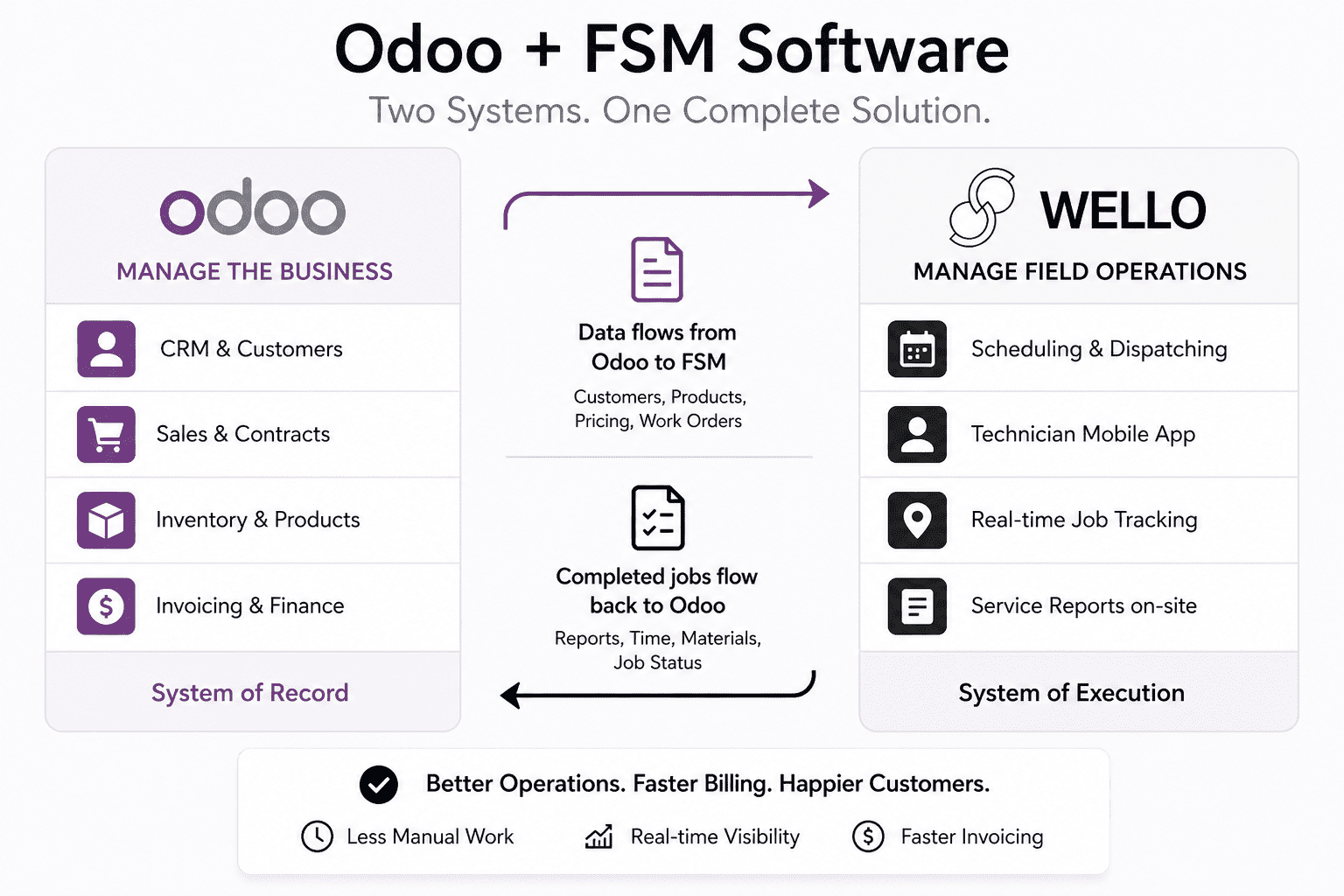
Odoo and WELLO integration
How Wello complements Odoo for field service operations
Wello is designed to extend Odoo into the field.
Field teams use Wello to:
- Plan and execute work orders
- Access customer and equipment data
- Track time and materials
- Generate service reports on-site
Odoo continues to manage:
- Customers and contacts
- Products and pricing rules
- Sales orders and invoices
The integration ensures that once a job is completed in Wello, all data flows automatically into Odoo.
You can explore the native integration here: https://wello.solutions/integrations/odoo/
Real impact: what changes when you connect FSM with Odoo
When companies connect field service software with Odoo, the impact is immediate.
Work orders move directly into invoicing without manual steps
Billing cycles are reduced from days to same-day invoicing
Data stays consistent across systems
Teams spend less time on administration
Managers gain real-time visibility into operations
This is not just a technical improvement. It directly affects revenue and efficiency.
Who should use Odoo with FSM software?
This setup is ideal for companies that:
- Provide installation, maintenance, or repair services
- Manage technicians in the field
- Handle multiple jobs per day
- Operate across different locations
- Use Odoo for CRM, accounting, or ERP
For these businesses, separating execution from business systems while keeping them connected is the most effective model.
Odoo vs FSM software: which one should you choose?
If your business is purely office-based, Odoo may be enough.
If your business depends on field operations, you need FSM software.
For most service companies, the answer is not one or the other.
The right setup is:
- Odoo for business operations
- FSM software like Wello for field execution
- Integration between both
Summary
Odoo and Field Service Management software serve different purposes.
Odoo manages customers, pricing, and financial processes. FSM software manages work orders, technicians, and service execution.
Using Odoo alone can work for simple operations, but it becomes limiting as complexity grows.
Combining Odoo with a dedicated FSM solution like Wello creates a connected system where field operations and business processes work together without friction.
This approach improves efficiency, reduces manual work, and speeds up the path from job completion to revenue.