Integrations & Connectivity
Connect service operations with your existing systems.
Enterprise service organizations rarely operate with a single system.
- ERP platforms manage finance and contracts.
- Warehouse systems manage inventory.
- Business Intelligence tools support reporting.
- Measurement devices generate inspection data.
When these systems operate in isolation, operational friction increases. Data must be re-entered, reconciled, or exported manually.
Wello connects service execution with surrounding enterprise systems so that operational data flows in a controlled and structured way.

ERP system integration
Service execution generates financial impact.
- Parts usage affects inventory valuation.
- Labor time influences billing.
- Contract coverage determines pricing.
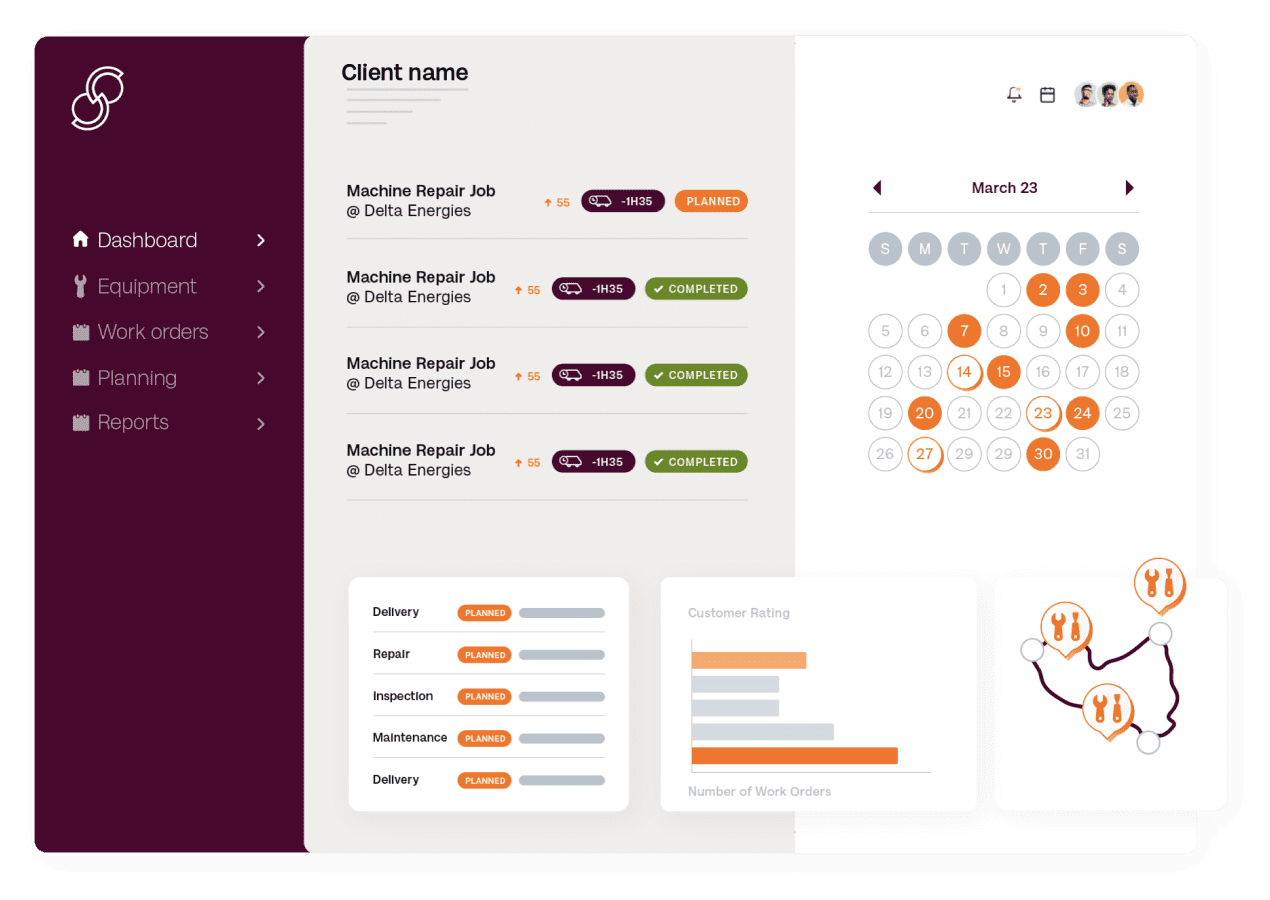
Wello synchronizes relevant service data with ERP systems such as SAP, Business Central, Exact, and other enterprise environments.
This ensures that operational activity aligns with financial records without duplicating processes.
ERP remains the financial backbone. Wello remains the operational service layer.
Business Intelligence connectivity
Some organizations require advanced analytical environments beyond standard reporting.
Wello allows structured service data to connect with external Business Intelligence tools.
Operational data can be accessed for deeper analysis while maintaining system performance and data protection.
This supports executive reporting and cross-department visibility without creating parallel data silos.
Measurement device connectivity
In certain industries, inspections rely on specialized measurement devices for combustion values, airflow readings, pressure levels, or other technical parameters.
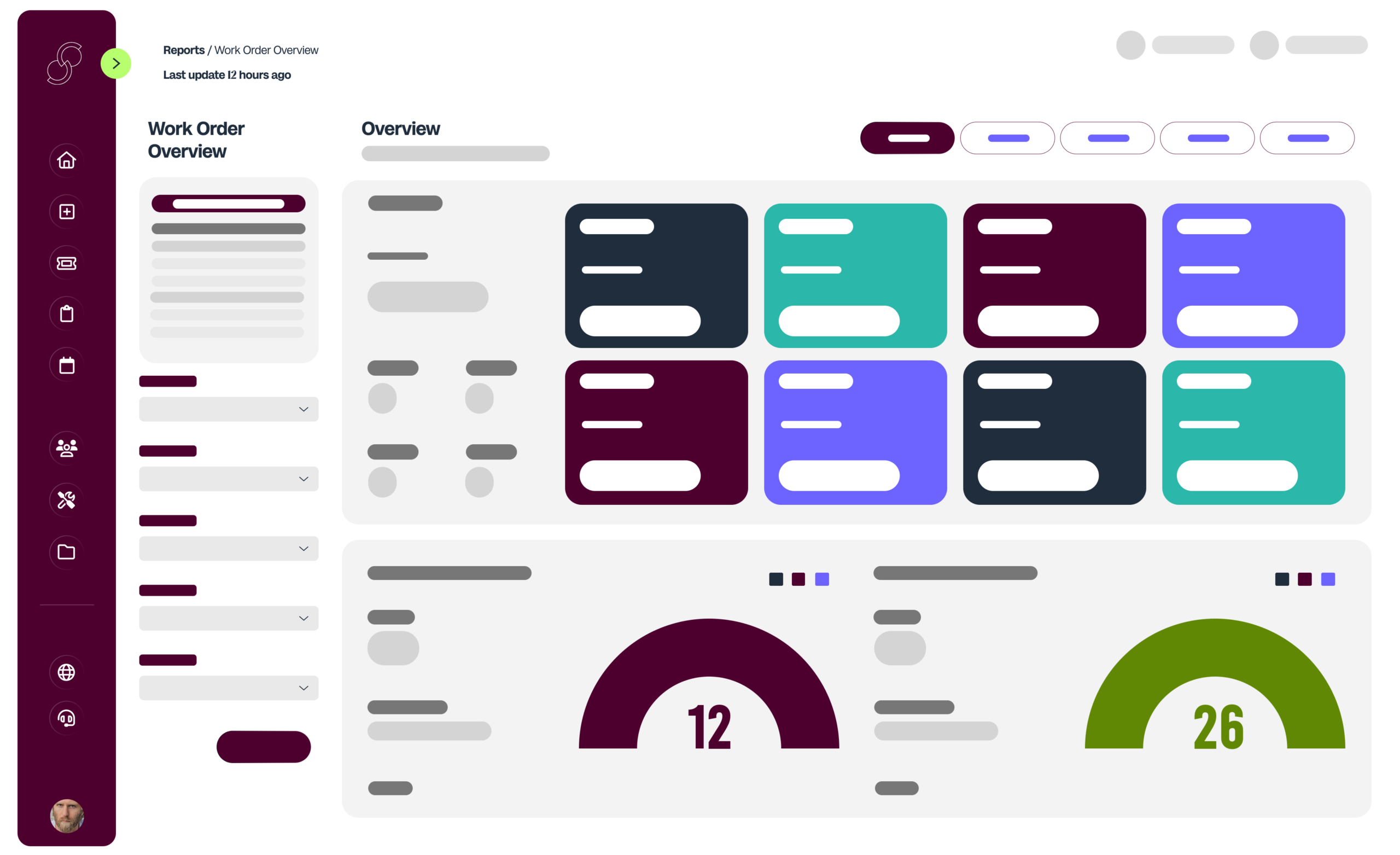
Wello supports integration with compatible measurement devices so that captured values can be transferred directly into the work order.
This reduces manual transcription errors and ensures that inspection data remains structured within the asset record.
Measurement results become part of the documented lifecycle.
Inventory and warehouse alignment
For organizations managing warehouse systems or external inventory tools, structured synchronization ensures that stock movement remains consistent across systems.
Parts consumption recorded in the field can align with centralized inventory data.
Stock visibility reflects real operational usage.
This reduces discrepancies between service teams and warehouse management.
Structured data exchange
Connectivity is not about exporting files manually.
Wello supports defined integration logic so that data exchange follows controlled processes.
Assets, work orders, parts usage, and contract information can synchronize according to agreed rules.
This prevents uncontrolled duplication and reduces reconciliation effort.
Supporting complex system environments
As service organizations scale, system landscapes grow more complex.
- Multiple regions may operate under shared ERP structures.
- Different branches may use centralized reporting environments.
- Regulatory requirements may require specific data retention standards.
Wello is designed to operate within such environments without forcing system replacement.
Integration supports operational clarity rather than adding complexity.
Connectivity as part of structured service operations
Integrations in Wello are not add-ons. They are part of the platform architecture.
- Service execution remains structured inside Wello.
- Financial and analytical systems remain aligned through controlled synchronization.
- Operational data flows where required without manual duplication.
Connectivity supports enterprise stability rather than system fragmentation.