
Enterprise Implementation
Tailored deployment for complex service environments.
Enterprise service organizations do not implement software lightly.
- They manage installation bases built over years.
- They operate across regions.
- They depend on ERP systems.
- They handle contractual and compliance obligations.
Implementation must protect operational continuity while introducing structured improvement.
Wello approaches enterprise implementation as a structured deployment process aligned with existing service operations.

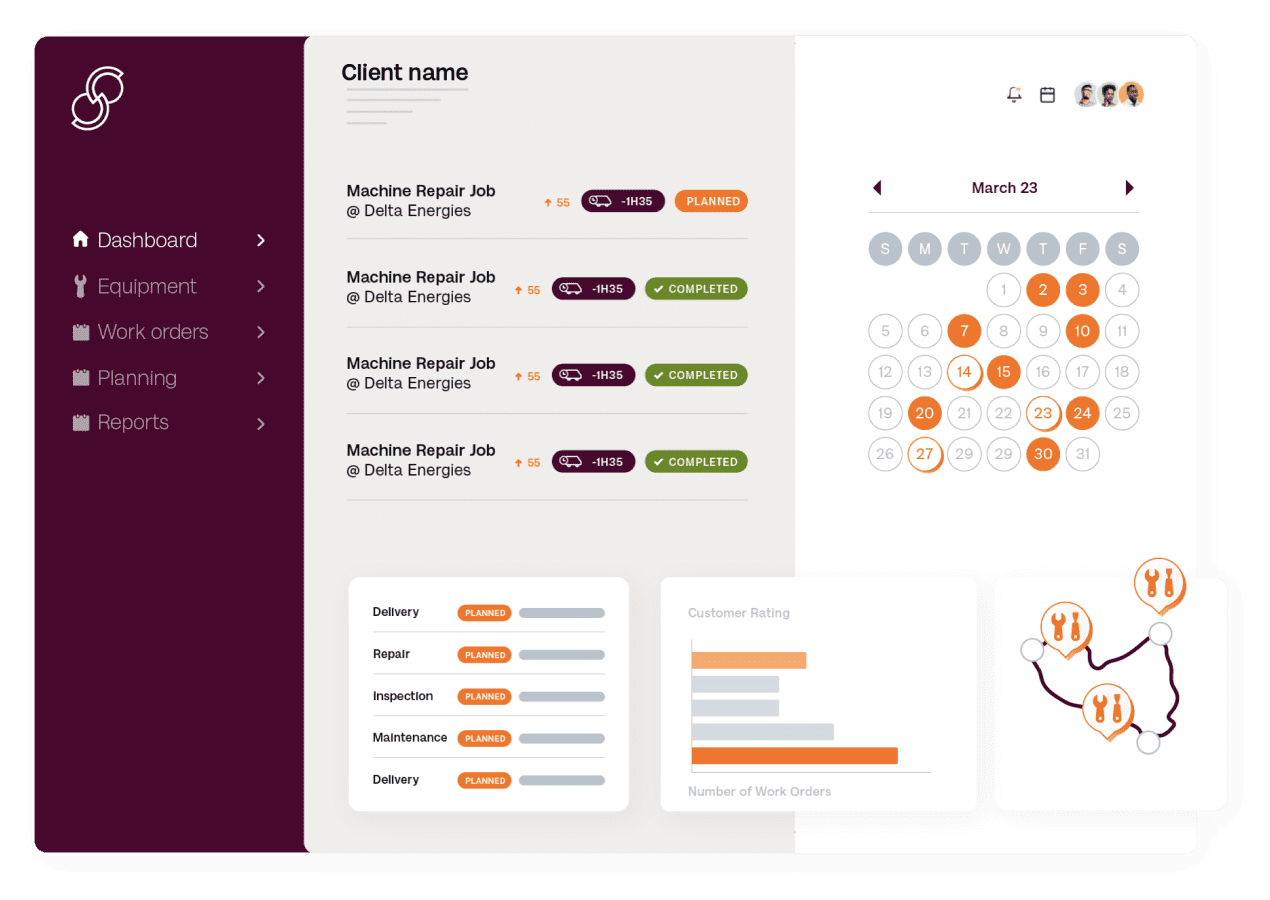
Understanding your operational structure
Before configuration begins, operational processes must be clearly mapped.
- Asset hierarchies
- Service contract logic
- Preventive maintenance structures
- SLA definitions
- Planning workflows
- Parts and stock management
- ERP synchronization requirements
Implementation starts with understanding how service is currently organized and where structure must be strengthened.
The objective is alignment, not disruption.
Configuration aligned with real workflows
Wello is configured to reflect the organization’s operational reality.
- Asset structures are defined according to the installation base.
- Maintenance plans reflect contractual commitments.
- Work order flows match internal approval logic.
- Planning processes are adapted to regional complexity.
The platform is structured around how service is actually delivered.
This ensures adoption remains practical for planners, technicians, and managers.
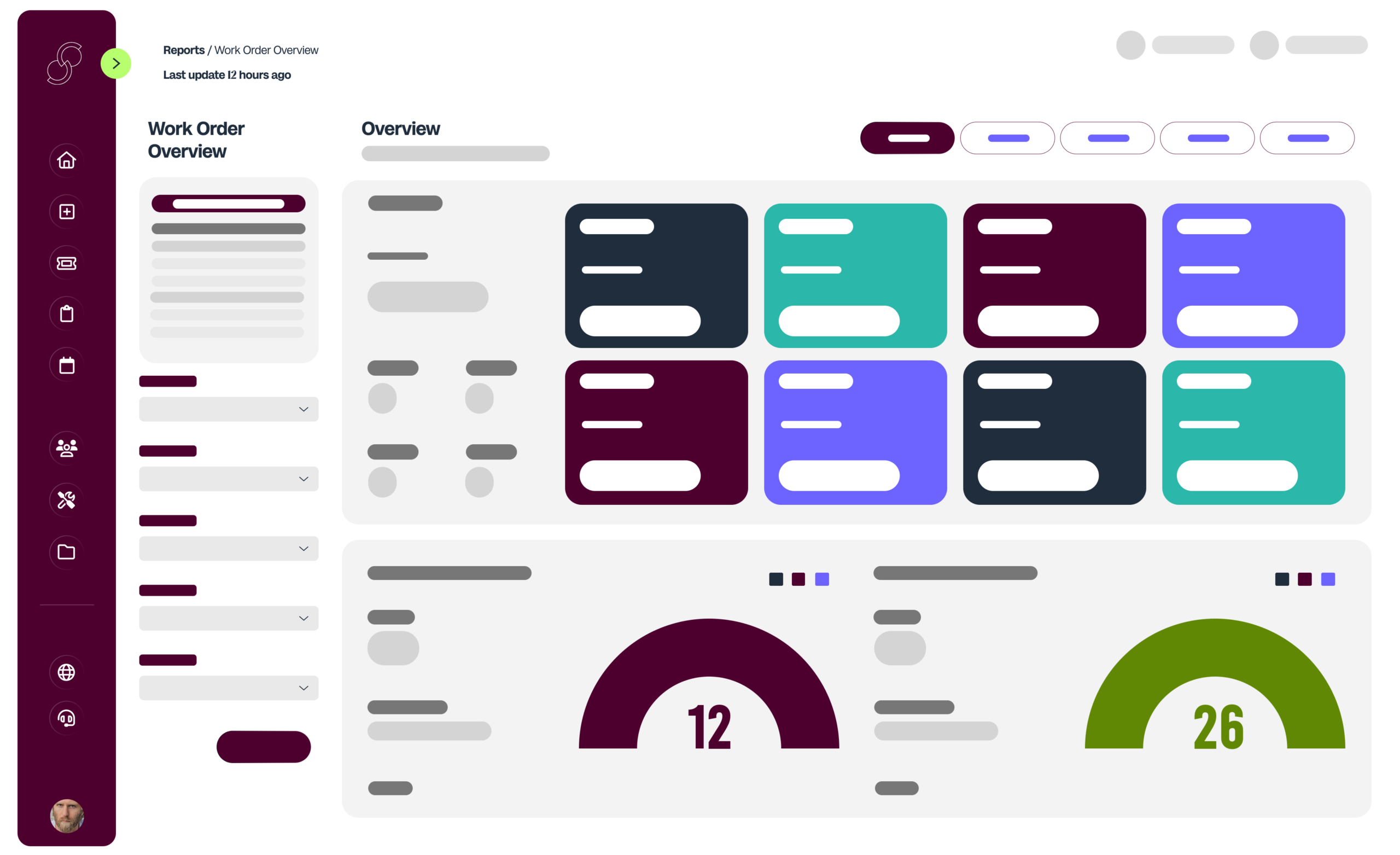
Controlled data migration
Enterprise environments often require migration of existing asset records and service history.
Data migration is approached methodically.
- Assets are structured correctly.
- Historical records are validated.
- Contract conditions are aligned.
The goal is not to move data quickly, but to move it correctly so that long-term lifecycle continuity is preserved.
ERP and system alignment during rollout
Because many enterprise customers operate with ERP systems, synchronization is configured during implementation.
- Parts logic
- Billing conditions
- Contract alignment
- Stock updates
Integration is tested in controlled stages to ensure operational and financial consistency.
Implementation does not end at configuration. It includes validation of system alignment.
Phased rollout when required
In multi-region organizations, full deployment may occur in phases.
- A pilot region may be launched first.
- Processes may be validated before expansion.
- Regional teams may onboard gradually.
This approach reduces risk and allows structured scaling.
The objective is operational stability during transition.
Training and operational readiness
Structured software requires structured usage.
Implementation includes training aligned with user roles.
- Technicians focus on field execution workflows.
- Planners focus on scheduling and SLA logic.
- Managers focus on reporting and oversight.
Training ensures that the platform is not only configured, but used correctly.
Long-term partnership
Enterprise service platforms are long-term decisions.
- Wello has operated in the Field Service Management domain for more than 20 years.
- More than 6,500 technicians use the platform daily.
- The company employs over 40 professionals dedicated to continuous development and support.
The platform evolves through a defined roadmap focused on structured service environments.
Implementation is the beginning of a long-term operational partnership.
Stability through structured deployment
Enterprise Implementation in Wello is not a generic onboarding process.
It is a structured deployment aligned with asset lifecycle management, service contracts, planning complexity, ERP synchronization, and compliance requirements.
The objective is controlled transition, operational continuity, and long-term service stability.