
What is Wello Odoo integration?
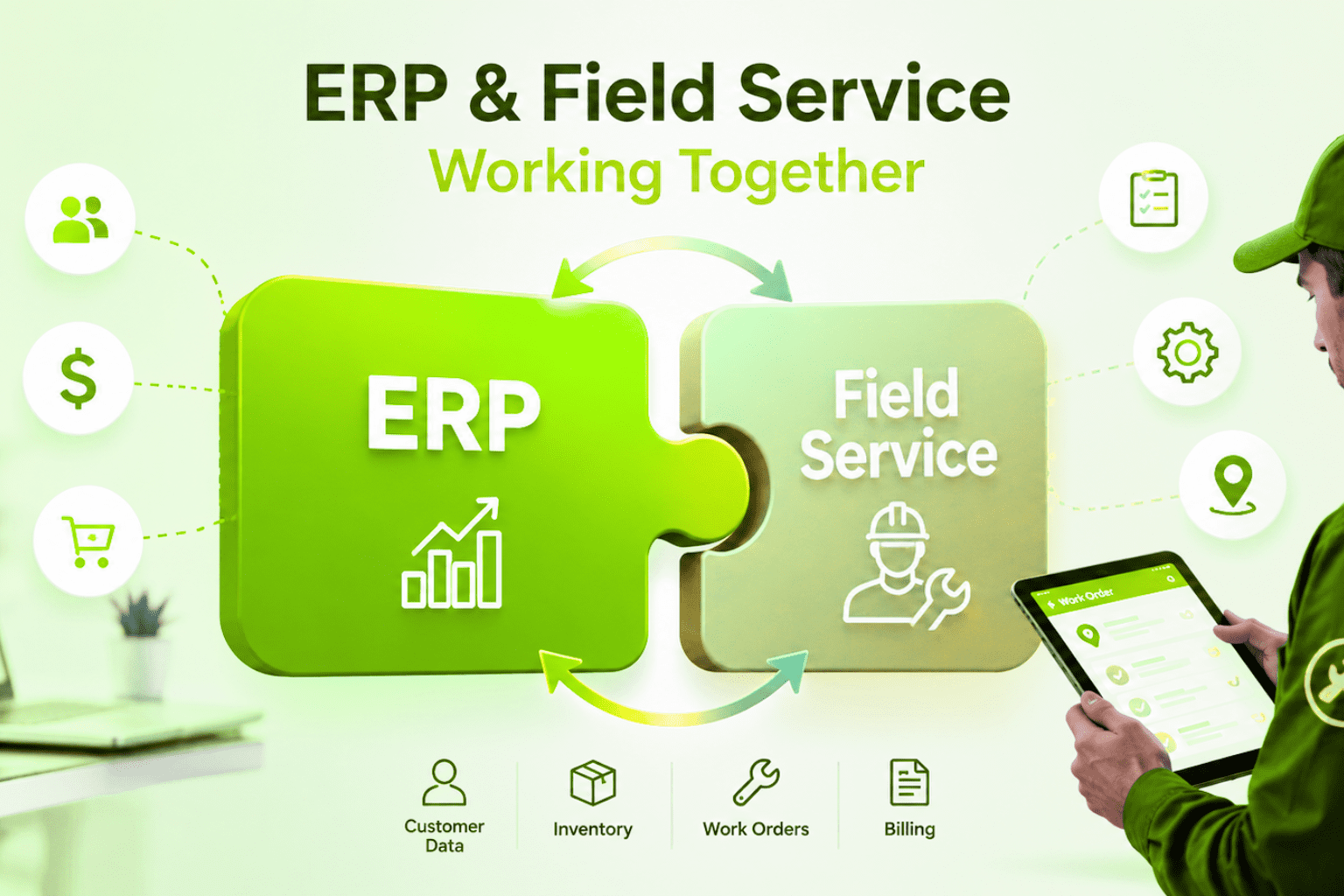
Wello Odoo integration connects Wello, a Field Service Management (FSM) software, with Odoo, an ERP system used for CRM, accounting, and business operations.
It allows data to move automatically between field teams and office systems. Customer information, products, pricing, and completed work orders stay aligned without manual input.
This means service teams can execute work in Wello while Odoo handles billing and business processes, with both systems staying in sync.
If you want to explore the connector directly, you can check it on the Odoo marketplace here: https://apps.odoo.com/apps/modules/15.0/wello-odoo-connector
How does Wello work with Odoo in practice?
In real operations, Wello and Odoo play different roles but operate as one connected system.
Field teams use Wello to plan and execute work. This includes managing work orders, assigning technicians, tracking time, and recording parts used during service jobs.
Odoo is used by office teams to manage customers, pricing, financial data, and invoicing.
The integration connects both sides so that once a job is completed in Wello, all relevant data flows directly into Odoo. There is no need to re-enter information or manually create invoices.
This removes the gap between field execution and financial processes.
What data is synchronized between Wello and Odoo?
The integration works through two-way synchronization.
From Odoo to Wello:
Customer companies and contacts are synchronized so technicians always have access to accurate client information. Products and spare parts are also synced, along with categories and price lists. Work order locations are created automatically based on customer addresses.
From Wello to Odoo:
Completed work orders are sent back to Odoo with full details. This includes hours worked, parts used, work order references, and technician notes. These are then converted into sales orders or invoices.
This structured data flow ensures both systems stay aligned at all times.
How does Wello help automate invoicing in Odoo?
One of the main reasons companies use Wello with Odoo is to automate the transition from completed work to billing.
When a technician finishes a job in Wello, the system captures all relevant data. The integration then sends this information to Odoo, where it can automatically create a sales order or invoice.
Companies can choose how pricing is handled. They can either use the pricing calculated in Wello or allow Odoo to apply its own pricing rules.
This flexibility is important for businesses with complex pricing models or contract-based billing.
Why is real-time integration important for field service companies?
In many service companies, there is a delay between job completion and invoicing. This delay is usually caused by manual processes, such as transferring job reports or validating data across systems.
With Wello connected to Odoo, this delay is removed. Data moves instantly from the field to the office.
This allows companies to invoice on the same day the work is completed. It improves cash flow and reduces the risk of missing or incorrect billing information.
Managers also gain real-time visibility into operations, allowing them to track performance, monitor workloads, and identify issues as they happen.
Who should use Wello Odoo integration?
Wello Odoo integration is designed for companies that manage field operations and already use Odoo for business processes.
This includes businesses that handle installation, maintenance, repair, or asset-based services.
It is especially useful for companies that:
Manage multiple work orders every day
Operate across different locations or regions
Need accurate tracking of time, parts, and service activity
Want to reduce manual work between field teams and finance
For these companies, connecting Wello with Odoo simplifies operations and improves overall efficiency.
How does Wello reduce manual work across systems?
Without integration, teams often need to enter the same data in multiple systems. Customer details are copied, job information is re-entered, and invoices are created manually.
Wello removes this duplication by keeping systems connected.
A customer created in Odoo appears automatically in Wello. A completed work order in Wello becomes a sales document in Odoo. Pricing and product data remain consistent across both platforms.
This reduces errors and frees up time for teams to focus on service delivery instead of data management.
What are the technical requirements to connect Wello with Odoo?
Setting up the integration is simple and does not require additional development work.
You need:
An accessible Odoo API URL, your database name, and valid user credentials. The user account must have access to customers, products, and orders.
On the Wello side, some configuration ensures alignment, such as matching product codes for billable hours and ensuring article references are consistent.
Once connected, the integration runs based on defined synchronization rules.
How does Wello support scalable service operations?
Wello is designed for companies that need to manage growing field operations without increasing complexity.
By connecting with Odoo, it creates a system where operations and finance work together. As the number of work orders increases, the process remains stable because data flows automatically.
Companies do not need to add manual steps or additional tools to handle growth.
If you want to explore how this works in detail or try the integration, you can access it here: https://wello.solutions/integrations/odoo/
What makes Wello Odoo integration different from custom integrations?
Many companies build custom integrations between systems. These often require ongoing maintenance and can break when systems are updated.
The Wello Odoo Connector is a ready-to-use integration designed specifically for field service workflows.
It uses structured data exchange and follows Odoo’s service layer, which ensures that business rules are respected and data remains consistent.
This makes it more reliable and easier to maintain compared to custom-built connections.
Summary
Wello Odoo integration connects field service operations with business systems in a structured and automated way.
Wello manages work orders, technicians, and service execution. Odoo manages customers, pricing, and financial processes. The integration ensures that data flows between both without manual input.
This reduces errors, speeds up invoicing, and improves visibility across the organization.
For service companies using Odoo, connecting Wello is a practical way to simplify operations and build a system that supports both daily work and long-term growth.