Modern service businesses depend on many software systems to manage their daily operations. A field service company may use one platform to manage work orders, another for accounting, another for inventory, and another for customer communication. These systems often operate in the cloud and are delivered as Software as a Service platforms. While each system serves an important purpose, the real challenge appears when these systems need to share data with each other.
The Problem of Data Silos
If data remains isolated inside individual tools, teams are forced to move information manually from one system to another. Dispatchers copy customer details into service software. Finance teams re-enter completed jobs into billing systems. Inventory teams update spare part usage separately. These repetitive actions introduce delays and increase the chance of errors. To operate efficiently, businesses must ensure that information moves securely and automatically between their SaaS systems.
Why Secure Data Exchange Matters
Secure data exchange between SaaS platforms has become an essential requirement for companies that rely on digital tools. It allows systems to communicate, synchronize information, and maintain accurate records without manual intervention. For field service organizations in particular, this capability is critical because operations depend on fast and accurate information flow between technicians, dispatch teams, and administrative departments.
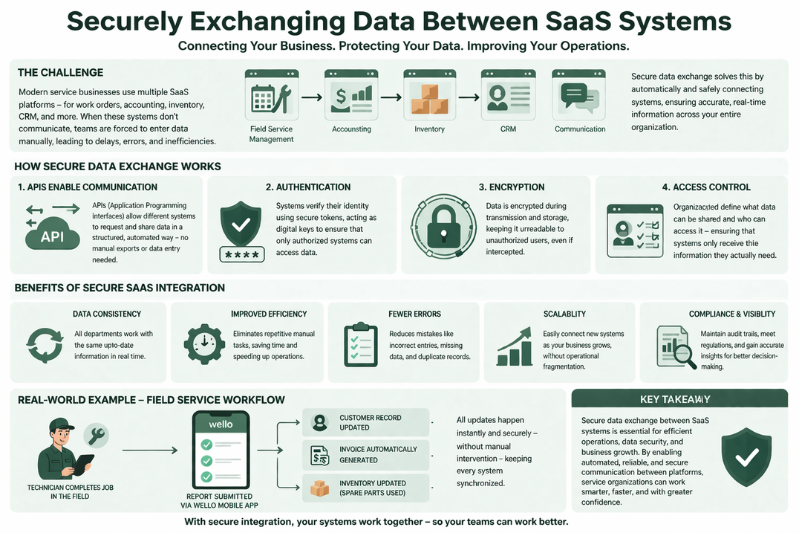
Secure data exchange for efficient operations
Connecting Service Platforms with the Broader Ecosystem
Digitization in service management has already transformed how work orders, maintenance records, and service reports are handled. Platforms such as Wello bring these workflows together by centralizing service operations in one environment. However, service management does not exist in isolation. The platform must also interact with accounting systems, customer relationship management platforms, reporting tools, and sometimes external equipment monitoring systems. Secure data exchange ensures that all these systems remain connected without compromising the safety of sensitive information.
Ensuring Data Consistency Across Systems
The first step in understanding secure SaaS integration is recognizing the value of data consistency. When systems exchange data automatically, every department works with the same information. A technician completes a job in the field and submits a report through the mobile application. That information should immediately update the customer record, trigger invoicing in the finance system, and update inventory records for the spare parts used. Without secure integration, each of these updates would require manual processing, which slows down operations and increases the risk of discrepancies.
The Role of APIs in SaaS Integration
Application Programming Interfaces, often called APIs, play a central role in enabling this exchange of information. An API allows one system to request and receive data from another system in a structured format. Instead of transferring files or relying on manual exports, APIs create a continuous communication channel between systems. For example, when a new customer is added in a CRM platform, the field service application can automatically receive that data and create the corresponding service record. This automated flow ensures that both systems remain synchronized without additional administrative work.
Security Challenges in Data Exchange
Security becomes a critical consideration whenever data moves between platforms. Service organizations handle a wide range of sensitive information, including customer addresses, equipment details, service histories, and billing information. If this data is exchanged without proper safeguards, it could be exposed to unauthorized access or manipulation. Secure SaaS integration therefore relies on several layers of protection designed to ensure that only authorized systems and users can access the information.
Authentication: Verifying System Identity
Authentication is one of the primary security measures used in SaaS integrations. Before one system can request data from another, it must prove its identity using secure credentials. These credentials are typically managed through token based authentication systems. Tokens act as digital keys that confirm the identity of the requesting system. Once verified, the receiving platform can allow the data exchange while maintaining strict control over what information is shared.
Encryption: Protecting Data in Transit and Storage
Encryption is another essential component of secure data exchange. When information travels between systems, it is transmitted through internet connections that may pass through multiple network points. Encryption ensures that the data remains unreadable to anyone who might intercept the transmission. Even if the data were captured during transfer, the encrypted format would prevent unauthorized parties from accessing the underlying information. Most modern SaaS platforms use strong encryption protocols to protect data during transmission and while it is stored within the system.
Access Control and Data Permissions
Access control also plays an important role in maintaining security during data exchanges. Not every system or user should have access to all information. A secure integration framework allows organizations to define exactly which data can be shared and under what conditions. For instance, a billing system may only require information related to completed service jobs and associated costs. It does not need access to technician schedules or internal operational notes. By limiting access to only the required data, organizations reduce the risk of unnecessary exposure.
Improving Operational Reliability Through Integration
In field service environments, secure integration also improves operational reliability. When systems communicate through structured APIs and automated workflows, the risk of missing information decreases significantly. A technician completing a repair can submit the report through the mobile application. That report automatically updates the central system, triggers the creation of an invoice, and logs the service history for the equipment. Every step occurs within seconds and without manual data entry.
Wello’s Role in Secure SaaS Integration
Platforms like Wello support these integrated workflows by providing structured APIs that allow secure communication with other SaaS systems. This capability ensures that service operations remain connected to financial systems, customer management platforms, and reporting tools. Instead of forcing organizations to operate with disconnected systems, the platform allows them to build a cohesive digital ecosystem where data flows securely and efficiently.
Reducing Errors Through Automation
Another important benefit of secure SaaS integration is the reduction of operational errors. Manual data transfer often leads to mistakes such as incorrect customer details, missing job information, or duplicate records. These errors may seem minor initially, but they can create significant issues when they affect billing accuracy or service history records. Automated data exchange eliminates these risks by transferring information directly from the source system without manual intervention.
Supporting Scalability and Growth
Scalability is another factor that makes secure SaaS data exchange valuable for growing service organizations. As companies expand their operations, they often introduce new software tools to support additional processes. Without integration capabilities, each new system adds complexity to the operational workflow. Teams must learn separate processes for managing information in each platform. Secure integrations allow new systems to connect seamlessly with existing infrastructure, ensuring that growth does not lead to operational fragmentation.
Integrating External Systems and IoT Data
In addition to internal systems, some service organizations also integrate external data sources. Equipment manufacturers may provide monitoring systems that track the performance of machinery in real time. When these monitoring systems detect anomalies or potential failures, they can send alerts to the field service platform. Secure integration ensures that these alerts automatically create service tickets or maintenance tasks, allowing technicians to respond quickly. This type of connected workflow supports predictive maintenance strategies and helps companies prevent equipment downtime before it affects customers.
Compliance and Data Protection
Compliance and data protection regulations also influence how SaaS systems exchange information. Many industries must follow strict rules regarding how customer data is stored and transmitted. Secure integration frameworks ensure that these requirements are respected by implementing encryption, audit trails, and access controls. Audit logs record every data exchange event, providing transparency and accountability for organizations that must demonstrate compliance during inspections or audits.
Enhancing Business Visibility and Decision Making
From a management perspective, secure SaaS integration also improves visibility across the business. When systems share data consistently, managers can generate accurate reports that reflect real operational performance. Service metrics, financial data, and customer insights become available in a unified reporting environment. This visibility allows leadership teams to make informed decisions about resource allocation, service improvements, and operational strategy.
Empowering Field Teams with Real-Time Data
For field service organizations that rely on mobile teams, the importance of secure data exchange becomes even more evident. Technicians working in the field depend on real time access to accurate information. They need to know the equipment history, customer requirements, and available spare parts before starting a job. Secure integrations ensure that this information is always up to date, regardless of which system originally generated it.
Building a Connected Digital Ecosystem with Wello
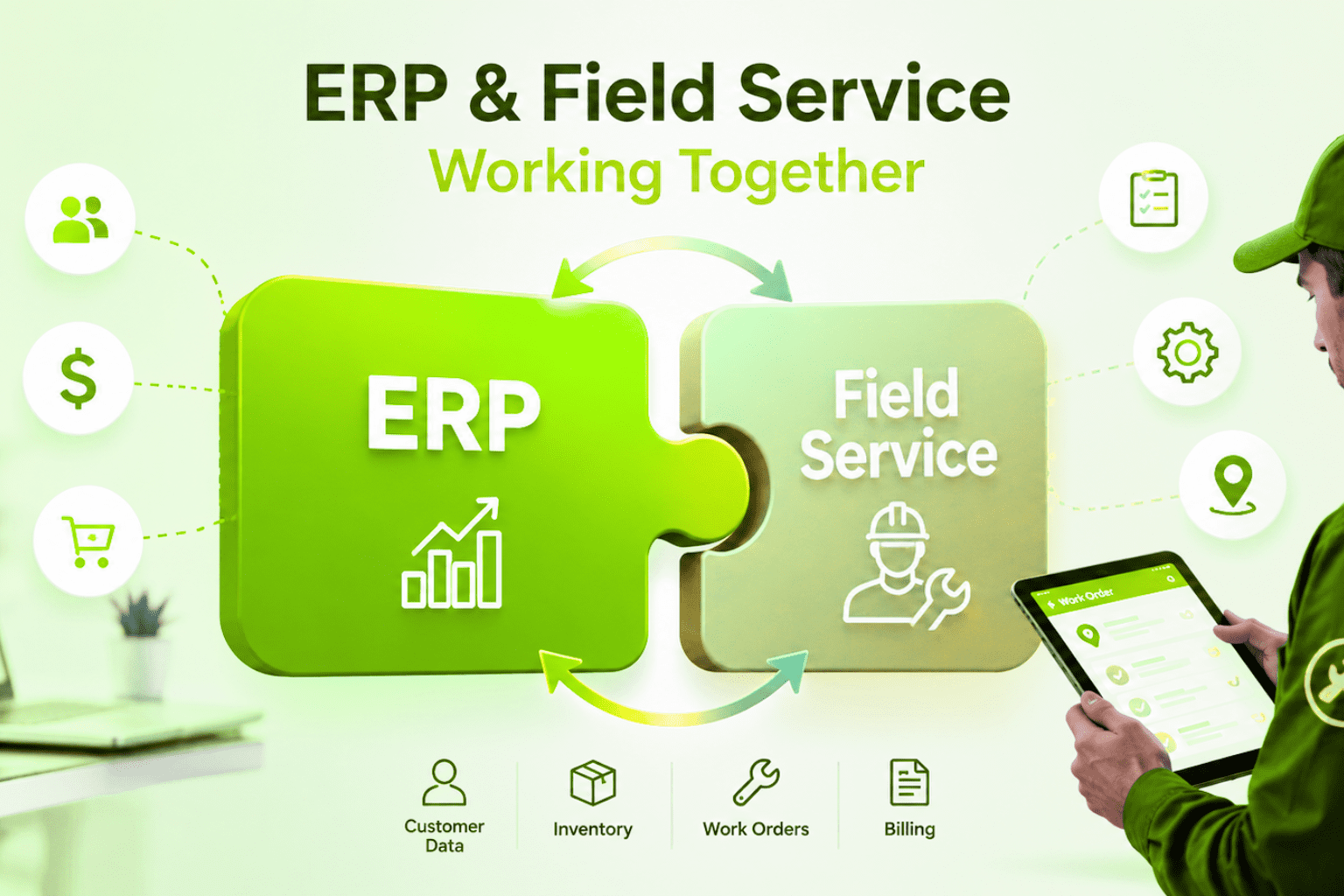
Wello addresses this requirement by maintaining a centralized service platform that can exchange data securely with other systems through well defined integration channels. By enabling automated synchronization of customer data, work orders, inventory updates, and billing information, the platform ensures that every department operates with the same reliable information.
Conclusion: A Foundation for Modern Service Operations
Securely exchanging data between SaaS systems is not just a technical feature. It is a foundational capability that supports efficient operations, protects sensitive information, and enables organizations to build connected digital workflows. For service companies that manage complex operations across multiple platforms, this capability becomes essential for maintaining accuracy, reliability, and customer trust.
As businesses continue to adopt cloud based software solutions, the number of systems involved in daily operations will continue to grow. The companies that succeed will be those that design their digital environments around secure and automated data exchange. By ensuring that systems communicate effectively while maintaining strong security protections, organizations can create a digital infrastructure that supports both operational efficiency and long term growth.