
Making field operations easier to manage and easier to track
Field service organizations have always operated in environments where precision, timing, and coordination determine the quality of the service delivered. Whether a technician is installing equipment, repairing machinery, inspecting systems, or maintaining assets, the work happens outside the office. For many years these operations relied heavily on paperwork, phone calls, and fragmented tools. Job orders were printed, service histories were stored in folders, and communication between technicians and dispatchers depended on constant calls. While this method worked in the past, it created delays, errors, and a lack of visibility across the business.
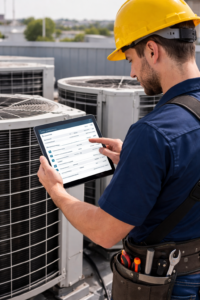
Field technician on rooftop with tablet
Today the expectations placed on service organizations have changed significantly. Customers want faster response times, clear updates, and reliable service outcomes. At the same time, service companies must control costs, manage technicians efficiently, and maintain accurate records for compliance and reporting. This shift has pushed the industry toward digitization and automation through modern field service applications. Platforms such as Wello allow service companies to replace manual processes with connected digital workflows that improve visibility, coordination, and service quality.
Digitization in field service is not simply about replacing paper with digital forms. It involves creating a connected environment where technicians, dispatchers, managers, and customers interact through the same system. Automation then builds on this digital foundation by allowing routine tasks to be handled automatically. The result is a more efficient operation where teams can focus on delivering service rather than managing administrative work.
Understanding the role of field service applications requires looking closely at the operational challenges that service businesses face every day. In many organizations, dispatchers spend hours planning schedules manually. They must check technician availability, verify skills, review job locations, and then assign work orders. When schedules change, the entire process has to be repeated. Technicians often receive job details through calls or emails, which increases the risk of missing information. Once the work is completed, technicians may return to the office to submit paperwork or send reports that need to be manually entered into another system. These delays slow down billing cycles and make it difficult for managers to track real-time performance.
Digitization removes these inefficiencies by centralizing information in a single platform. A field service application stores customer data, equipment details, service history, job instructions, and technician schedules in one place. When a dispatcher creates a work order, all relevant information becomes instantly available to the assigned technician. Instead of relying on printed documents or verbal instructions, the technician can open the mobile application and see the full job context before arriving on site.
Wello supports this type of workflow by allowing service teams to access job cards directly from a mobile device. Each job card includes equipment details, service history, required tasks, and customer notes. This preparation helps technicians diagnose issues more quickly and avoid repeat visits caused by missing information. By ensuring that technicians arrive fully informed, digitization improves first-time fix rates and reduces operational costs.
Automation further enhances this process by reducing the manual effort required to manage service operations. Scheduling and dispatching can be automated based on technician skills, availability, and location. Instead of manually checking calendars, the system can recommend the best technician for each job. This ensures that work is distributed efficiently and travel time is minimized. For companies managing large field teams, automated scheduling significantly improves daily planning and resource utilization.
Another important aspect of automation is the handling of service updates and communication. In traditional environments, customers often have little visibility into when a technician will arrive or how long the repair will take. This uncertainty leads to frustration and repeated calls to the service desk. Field service applications solve this problem by automatically sending updates when a technician is assigned, when the technician is on the way, and when the job is completed. These automated notifications create transparency and help customers feel informed throughout the service process.
In addition to communication, automation plays a crucial role in service documentation. Service reports are essential for maintaining records of work performed, ensuring compliance with industry regulations, and supporting future maintenance activities. When reports are written manually on paper, they can be incomplete, difficult to read, or easily lost. Digitized service reporting allows technicians to capture information directly through the mobile application. Photos, notes, and customer signatures can be added to the report before the technician leaves the site. Once submitted, the report is instantly stored in the system and linked to the equipment and customer record.
Wello simplifies this reporting process by enabling technicians to generate digital reports immediately after completing a job. These reports become part of the equipment history, making it easier for service teams to understand past repairs and maintenance activities. Over time this data becomes valuable for identifying recurring issues, planning preventive maintenance, and improving long-term asset reliability.
Digitization also improves inventory and spare parts management. Field technicians often rely on specific parts to complete repairs, and delays in obtaining those parts can lead to extended downtime for the customer. When inventory systems are disconnected from service operations, technicians may arrive on site without the necessary components. A connected field service application integrates inventory tracking with work orders, allowing dispatchers and technicians to see which parts are available before the job begins. If a part needs to be ordered, the system can trigger that request automatically.
The financial impact of digitization becomes visible when looking at billing and invoicing processes. In paper-based systems, invoices are often delayed because service reports must be reviewed and manually entered into accounting systems. This delay slows down revenue collection and increases administrative workload. With digital workflows, service reports are submitted instantly, allowing invoices to be generated more quickly. This improves cash flow and reduces the time spent on back-office tasks.
Automation also supports performance monitoring and operational analysis. Service managers need accurate data to understand how their teams are performing. Without digital systems, gathering this information requires manual compilation of spreadsheets and reports. A modern field service platform captures operational data automatically as technicians complete their work. Managers can then review metrics such as response times, job completion rates, technician productivity, and service quality.
Wello provides operational insights that help managers evaluate service performance across their teams. By analyzing this data, companies can identify patterns such as recurring equipment failures or inefficient travel routes. These insights allow organizations to make informed decisions about workforce planning, maintenance strategies, and customer support.
Another benefit of field service digitization is improved collaboration between office teams and field technicians. In traditional systems, communication often depends on phone calls that interrupt both dispatchers and technicians. When information is stored in a shared platform, everyone involved in the service process has access to the same data. Dispatchers can see job progress in real time, technicians can request assistance when needed, and managers can monitor operations without waiting for end-of-day updates.
This level of coordination is particularly valuable for organizations that manage complex service networks or operate across multiple regions. With a digital platform like Wello, service teams can maintain consistent workflows regardless of location. Technicians in different regions follow the same procedures, use the same reporting tools, and contribute to the same centralized data system.
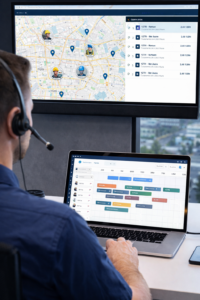
Dispatcher monitoring technician assignments
The adoption of field service applications also supports long-term service strategies such as preventive maintenance. Instead of waiting for equipment to fail, service organizations can schedule maintenance activities based on service history and operational data. Automated reminders ensure that maintenance tasks are performed on time, reducing the likelihood of unexpected breakdowns. Customers benefit from more reliable equipment, while service companies gain predictable workloads and stronger customer relationships.
As the field service industry continues to evolve, the importance of digitization and automation will only increase. Companies that rely on manual processes will find it difficult to keep up with the expectations of modern customers and the operational demands of growing service networks. Digital platforms provide the foundation needed to manage complex service operations with accuracy and efficiency.
Wello demonstrates how a field service application can bring together planning, execution, reporting, and analysis in a single environment. By digitizing work orders, automating scheduling, and enabling real-time communication, the platform allows service organizations to streamline their operations while maintaining high service standards.
The transition to digitized field service management does not happen overnight. It requires careful planning, team training, and a clear understanding of operational goals. However, the benefits quickly become visible once the system is in place. Technicians spend less time on administrative tasks, dispatchers manage schedules more effectively, and customers receive faster and more transparent service.
Ultimately, digitization and automation in field service applications represent a shift toward smarter service operations. Instead of relying on disconnected tools and manual coordination, service companies can operate with a unified platform that supports every stage of the service lifecycle. This transformation allows organizations to deliver consistent, reliable, and efficient service while building stronger relationships with the customers they serve.