The Shift Toward Connected Digital Ecosystems
Software systems no longer operate as isolated tools. Modern organizations depend on multiple digital platforms to manage their operations, customers, finances, analytics, and communication. Over the past decade, the shift toward cloud based software has transformed how businesses work. Instead of maintaining large on premise systems, companies now rely on specialized SaaS platforms that handle different operational needs.
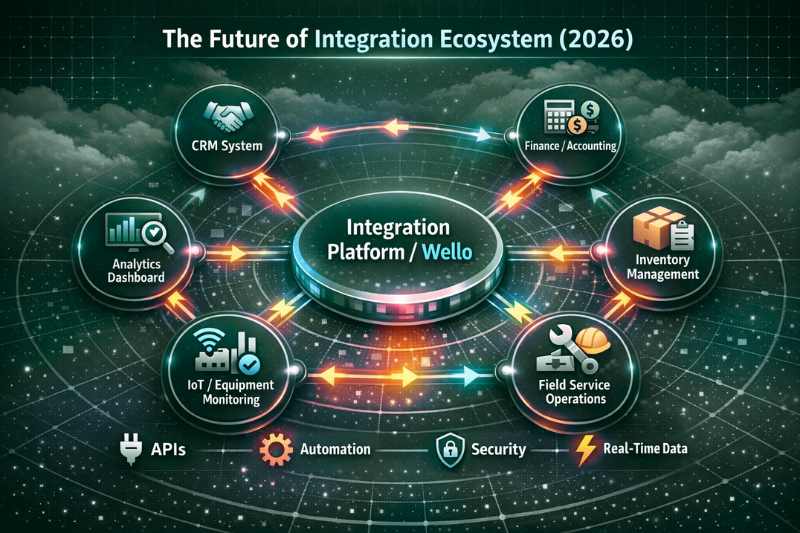
Future of integration ecosystem 2026
Why Integration Is Now a Business Priority
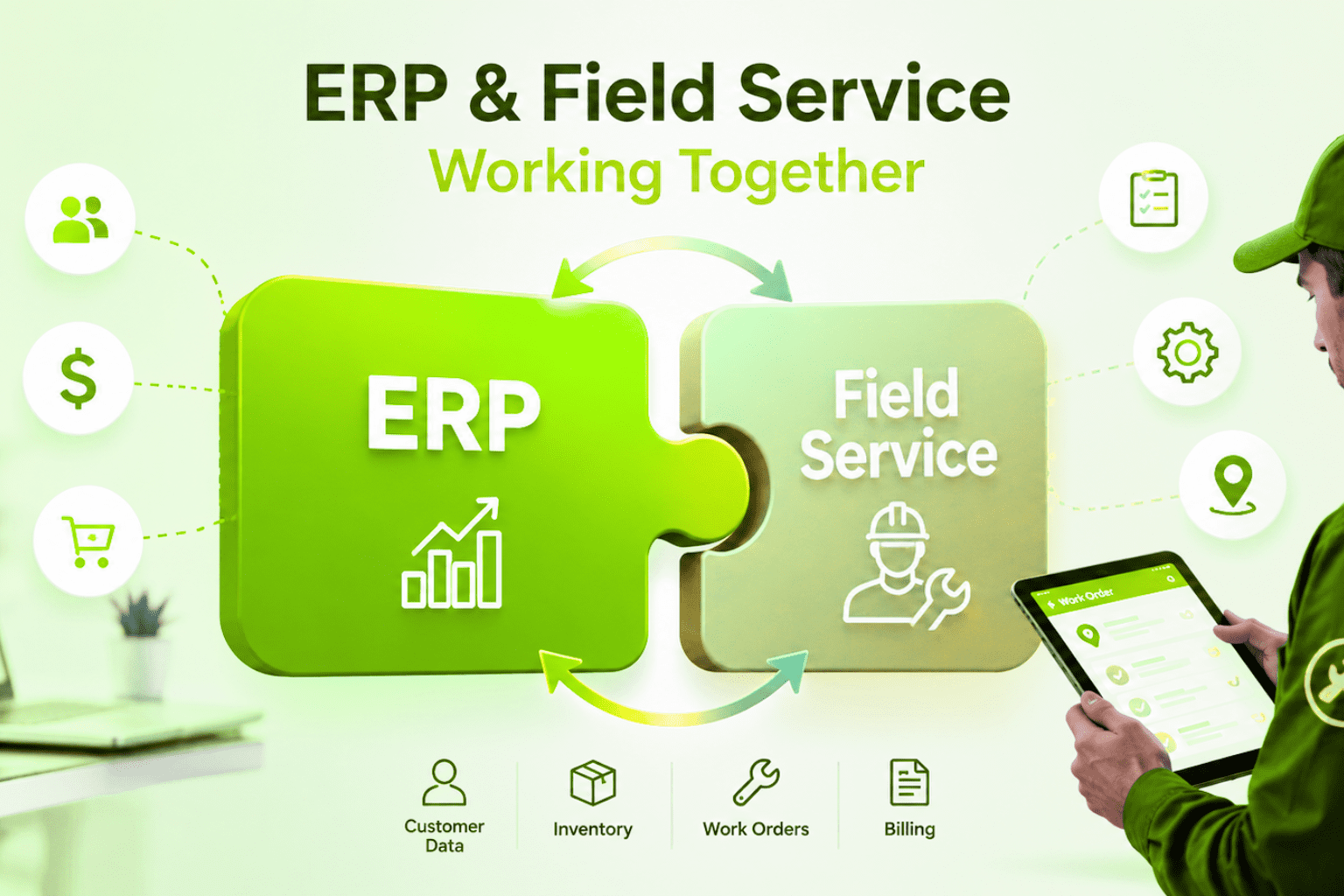
This shift has created a new challenge. While each system performs its role effectively, the real value comes when these systems work together. Data must move between platforms to keep operations aligned. Service teams need customer information from CRM platforms. Finance systems require job completion data from service platforms. Inventory systems must update spare part usage in real time. Integration has therefore become one of the most important components of modern digital infrastructure.
As organizations continue to adopt cloud technology, the role of integration will only grow stronger. By 2026, integration strategies will move beyond simple system connections toward more intelligent and automated digital ecosystems. Businesses will no longer think about individual software platforms as separate tools. Instead, they will design connected environments where systems communicate continuously and support operational workflows across the entire organization.
The future of integration is being shaped by several important trends. These trends focus on improving flexibility, strengthening security, enabling real time data exchange, and simplifying how organizations connect their digital systems. For service companies operating complex operations with distributed teams, these developments will have a direct impact on how work is planned, executed, and monitored.
The Rise of API-First Architecture
One of the most visible trends in integration is the growing adoption of API first architecture. In earlier software environments, integrations were often built as secondary features after the core application was developed. This approach made integrations difficult to maintain and limited how systems could communicate with each other. In an API first architecture, integration capabilities are designed as a core part of the system from the beginning.
When a platform is built with APIs at its foundation, it becomes easier to connect with other systems. Each function within the platform can be accessed through well defined API endpoints, allowing external applications to interact with the system securely. This approach provides flexibility for organizations that rely on multiple software platforms. Instead of building custom integrations every time a new system is introduced, businesses can rely on standardized APIs that simplify the integration process.
Platforms that support API driven architecture allow organizations to build connected ecosystems where data flows freely between systems. A field service platform such as Wello, for example, can connect with accounting software, customer management systems, analytics tools, and inventory platforms through structured APIs. This type of integration ensures that operational data remains synchronized across departments, reducing manual work and improving accuracy.
Real-Time Data Exchange: From Batch to Instant
Another important trend shaping integration in 2026 is the increasing demand for real time data exchange. In traditional integration models, data was often transferred in scheduled batches. Systems would export information at fixed intervals and import updates periodically. While this approach worked for basic reporting, it was not suitable for operational environments where decisions depend on immediate information.
Real time integration allows systems to exchange data instantly as events occur. When a technician completes a service job, the field service platform immediately updates the customer record, triggers invoice creation, and logs equipment service history. Dispatchers can see job progress without waiting for manual updates. Finance teams can process billing more quickly because the required information becomes available instantly.
Real time integration improves operational visibility across the organization. Managers can monitor service performance, track technician productivity, and identify operational bottlenecks as they occur. This level of responsiveness is particularly valuable for service companies that manage high volumes of daily work orders or operate across multiple regions.
Automation in Integration Workflows
Automation will also play a larger role in integration strategies in the coming years. As organizations connect more systems, manual management of these connections becomes increasingly complex. Automation allows integration workflows to operate independently once they are configured. Data transfers, process triggers, and system updates occur automatically without requiring continuous supervision.
For example, a service organization may configure an automated workflow where new customer accounts created in the CRM platform automatically appear in the field service system. Equipment registrations can trigger preventive maintenance schedules. Completion of a work order can generate an invoice in the finance system. These automated processes reduce administrative workload while ensuring that operational information remains consistent across platforms.
Event-Driven Architecture: Systems That React
Another trend emerging in the integration landscape is the growth of event driven architectures. In an event driven system, software platforms respond to events rather than relying solely on direct requests for data. When a specific event occurs, such as the creation of a new work order or the completion of a service task, the system automatically notifies other connected platforms. These platforms then take the appropriate action based on the event.
Event driven integration improves system responsiveness and reduces the need for constant polling between systems. Instead of repeatedly asking whether new data is available, systems simply react when events occur. This approach improves performance and reduces unnecessary network traffic. It also allows organizations to design workflows that respond dynamically to operational changes.
Strengthening Integration Security in 2026
Security will remain a central concern as integration networks expand. Each new integration creates another pathway through which data moves between systems. Organizations must ensure that these pathways remain protected against unauthorized access. In 2026, integration security will focus heavily on strong authentication, encrypted communication, and detailed monitoring of system interactions.
Token based authentication methods will continue to replace static credentials as the preferred method for securing integrations. These tokens provide time limited access that reduces the risk of credential misuse. Encryption protocols will protect data during transmission, ensuring that sensitive information remains unreadable if intercepted during transfer. Detailed logging and monitoring systems will allow organizations to track every interaction between connected platforms.
The Growing Importance of Data Governance
Data governance will also become an important element of integration strategies. As systems exchange more information, organizations must maintain control over how that data is used, stored, and shared. Clear governance policies help define which systems can access specific types of data and under what conditions. This ensures that integrations support operational efficiency while maintaining compliance with data protection regulations.
Integration Platforms as Centralized Hubs
Another emerging trend is the use of integration platforms that simplify how organizations connect their systems. These platforms act as central hubs where integrations can be configured, monitored, and managed. Instead of building separate integrations for each system pair, organizations can manage connections through a unified integration environment. This approach reduces complexity and allows teams to maintain visibility over their digital infrastructure.
For service organizations, integration platforms help streamline operations by ensuring that information moves smoothly between systems. Customer data, equipment records, service reports, and financial transactions can all be synchronized automatically. When integration workflows are properly designed, teams spend less time managing data and more time focusing on service delivery.
IoT and Predictive Maintenance Integration
The expansion of connected devices will also influence the future of integration. Many industries are beginning to use equipment monitoring systems that collect data from machines operating in the field. Sensors can track performance indicators such as temperature, pressure, vibration, and operational hours. These monitoring systems generate large volumes of data that must be integrated with service platforms to provide meaningful insights.
When integrated with field service applications, equipment monitoring systems can trigger maintenance tasks automatically. If a machine shows signs of potential failure, the monitoring platform can send an alert that creates a service ticket in the field service system. Dispatchers can assign technicians to inspect the equipment before a breakdown occurs. This type of predictive maintenance improves equipment reliability while reducing unplanned downtime.
How Wello Enables Seamless Integration
Platforms like Wello are positioned to support these integration trends by enabling structured communication between service operations and external systems. Through secure APIs and controlled data exchange mechanisms, the platform allows organizations to connect their service workflows with financial systems, customer platforms, analytics tools, and equipment monitoring solutions. This capability ensures that service operations remain aligned with the broader digital environment of the business.
Building Future-Ready Connected Systems
The future of integration will ultimately focus on creating connected digital ecosystems rather than isolated applications. Organizations will design their technology environments so that systems collaborate continuously. Information will move automatically between platforms, enabling teams to operate with real time insights and coordinated workflows.
By 2026, businesses that embrace integration as a core strategy will gain significant operational advantages. Their systems will communicate efficiently, their data will remain consistent across departments, and their teams will be able to respond quickly to changing operational conditions. Companies that continue to operate with disconnected systems will face increasing challenges as digital infrastructure becomes more complex.
Integration as a Strategic Business Advantage
Integration is no longer just a technical consideration for IT departments. It has become a strategic component of business operations. As software platforms continue to evolve, the ability to connect systems securely and efficiently will determine how effectively organizations can scale their operations, deliver services, and maintain customer trust.
The companies that prepare for the future of integration today will build digital environments capable of supporting long term growth. By investing in secure APIs, real time data exchange, automated workflows, and flexible integration architectures, organizations can create technology ecosystems that support both operational efficiency and continuous innovation.