Parts & Stock Control
Maintain accurate visibility across van and warehouse inventory.
In service organizations that manage machines and equipment at scale, parts are directly tied to service quality.
- A missing component delays completion.
- Incorrect stock levels create planning errors.
- Unregistered parts lead to billing discrepancies.
- Lack of traceability increases compliance risk.
Wello connects parts usage directly to work orders, assets, technicians, and ERP systems so that inventory remains aligned with real execution.

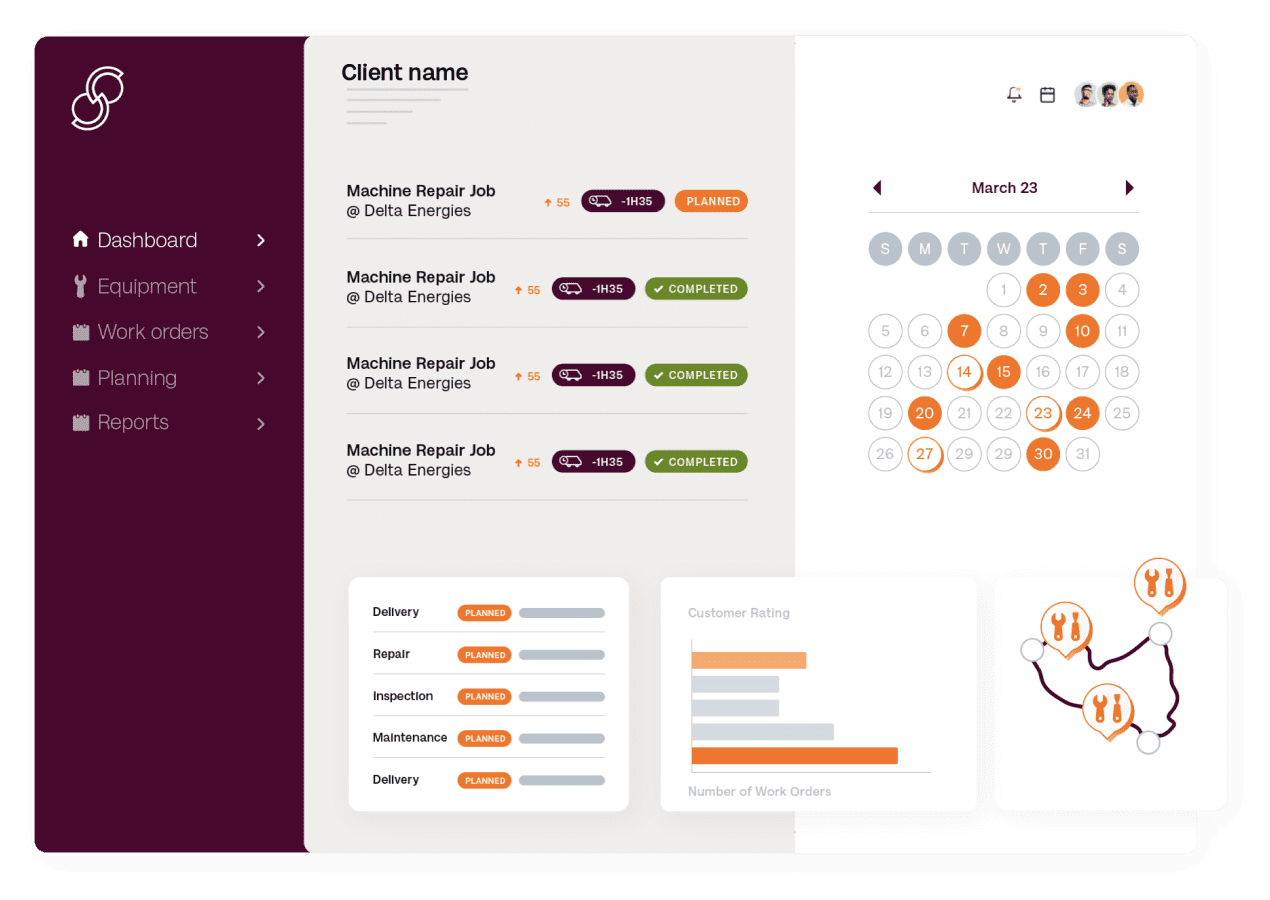
Van stock connected to daily execution
Technicians often carry dedicated van stock to support first-time fix.
Without structured tracking, stock levels become unreliable. Parts may be used but not registered. Inventory may appear available in the system but not physically present.
In Wello, parts are registered directly within the work order during execution. When a technician selects a part, it is immediately linked to the job and deducted from their assigned stock.
Van stock levels remain current because they are updated as part of real service activity.
This reduces manual reconciliation and improves planning accuracy.
Warehouse visibility across regions
In multi-region environments, inventory may be distributed across central warehouses and local branches.
Wello provides visibility into stock levels across locations so that planners and service managers can see where parts are available.
When stock needs to be transferred or replenished, decisions are based on actual system data rather than estimates.
As installation bases grow, structured inventory visibility prevents duplication and unnecessary emergency purchases.
Parts linked to specific assets
Parts are not generic items. They are often specific to equipment models, serial numbers, or configurations.
Wello links parts usage directly to the asset record.
Over time, this creates a documented component history:
- Which parts were replaced
- How often replacements occurred
- Which components show higher wear
This supports reliability analysis and maintenance refinement.
Inventory management becomes connected to asset lifecycle, not isolated in a separate module.
Bill of materials and recommended parts
For recurring maintenance or known equipment types, predefined bills of materials can be configured.
This allows work orders to include expected components automatically.
- Technicians arrive prepared.
- Parts requirements are predictable.
- Stock planning becomes more stable.
Recommended parts logic supports higher first-time completion rates without relying on individual memory.
Alignment with billing and ERP systems
Parts usage influences financial processes.
- Incorrect registration affects invoicing.
- Warranty coverage may depend on component type.
- ERP stock levels must remain accurate.
Wello connects parts usage within work orders to ERP environments so that operational and financial records remain aligned.
When parts are consumed during execution, that activity can flow into ERP systems without separate data entry.
This reduces discrepancies between service teams and finance.
Traceability and accountability
In compliance-sensitive industries, component traceability may be required.
By linking parts directly to work orders and assets, Wello ensures that replacement history remains visible over time.
If a specific component batch must be reviewed or validated, the history can be retrieved.
Inventory activity is not anonymous. It is tied to execution.
Structured stock control at scale
As technician teams expand and installations increase, parts complexity grows naturally.
Wello keeps van stock, warehouse inventory, parts usage, and asset history connected within one structured environment.
- Stock reflects real execution.
- Planning reflects real availability.
- Billing reflects real consumption.
- Asset history reflects real component changes.
Inventory control becomes part of service operations, not a separate administrative burden.